How to Eat Out and Still Hit Your Macros
Nobody tracks their way through a wedding. But most restaurant meals are more predictable than they look. Cuisine-by-cuisine ordering rules, the three ingredients behind most hidden calories, and how to estimate when there is no menu at all.
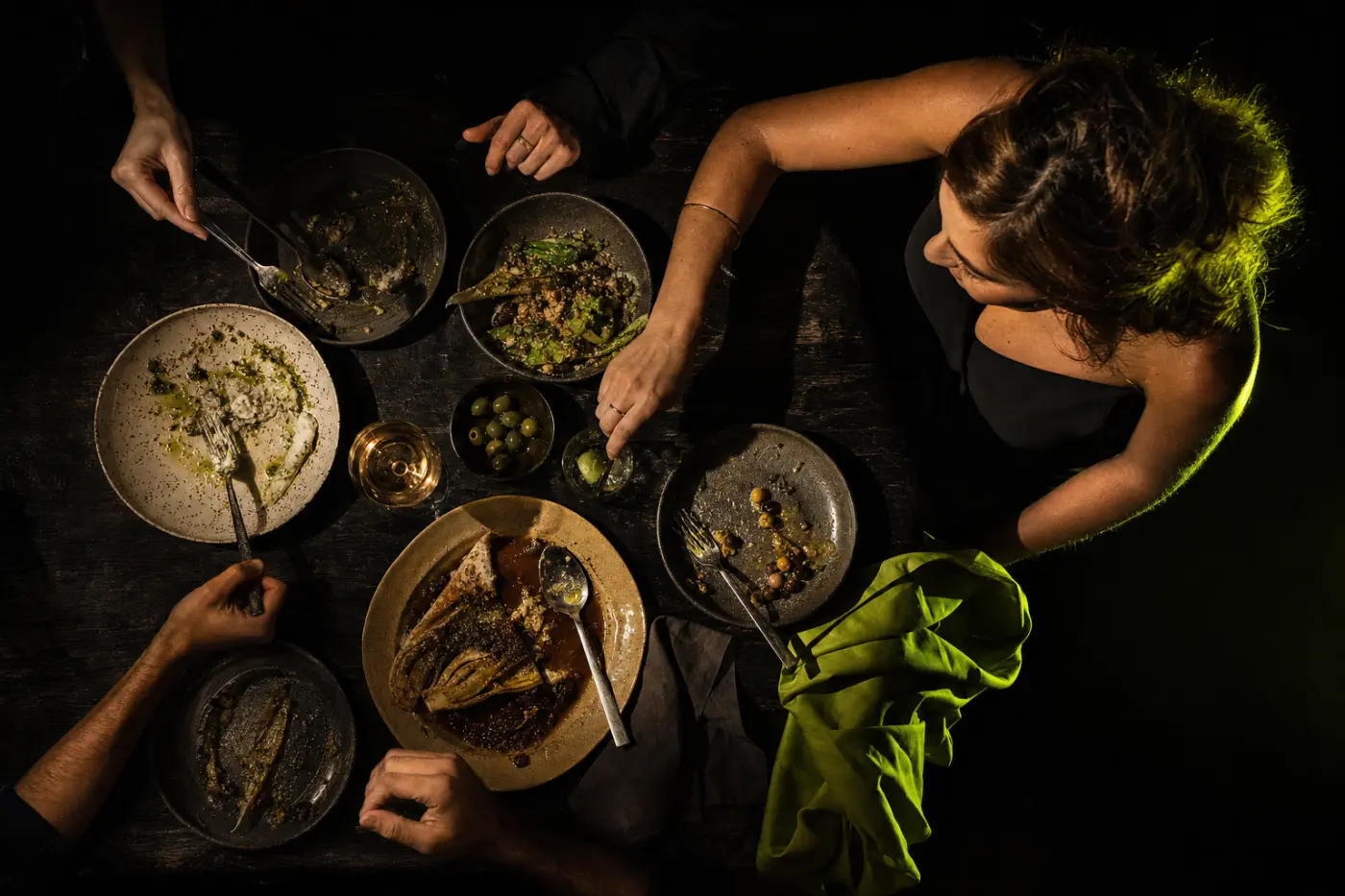
- Three ingredients account for most hidden restaurant calories: cooking oil, cream and sugar in sauces.
- Order protein first and build the rest of the plate around it.
- Estimate high. If you think it was 700, log 900 — under-estimation is the near-universal bias.
- One meal a week barely matters. One meal a day, mis-estimated, matters enormously.
- For events you cannot control, eat the day around the meal rather than trying to control the meal.
The advice to "just cook at home" is correct and useless. People eat out. There are weddings, work dinners, family obligations and Friday nights, and a nutrition approach that collapses on contact with any of them is not an approach.
The good news is that restaurant meals are far more predictable than they feel, because the calories hide in a very small number of places.
Where the calories actually are
Three ingredients account for most of the gap between what you think you ate and what you ate.
1. Cooking oil. A restaurant kitchen uses more fat than you would, because fat is flavour and heat transfer. A single tablespoon is 110 to 120 calories, and a stir fry or a curry can carry three or four. This is invisible — it is absorbed into the food, not sitting on it.
2. Cream, butter and cashew paste. The difference between a tomato-based gravy and a makhani version of the same dish is several hundred calories, and both look like curry.
3. Sugar in sauces. Sweet chilli, teriyaki, barbecue, most salad dressings, most Chinese sauces. Rarely tasted as sweet, frequently 100 to 200 calories per serving.
Notice what is not on that list: the protein, the rice, the bread. The base ingredients are usually roughly what you expect. It is the preparation that moves.
Ordering rules by cuisine
Indian. Tandoori and grilled preparations are dramatically lighter than gravies. Choose tomato and onion bases over makhani, korma or anything described as creamy. Roti over naan, and skip the butter on top. Dal is good; dal makhani is a different food. Detail on the underlying numbers is in the Indian macro guide.
Italian. Tomato-based sauces over cream-based. A grilled protein with a side beats a pasta as a main if you are managing a deficit. Pizza is more manageable than people assume — it is the garlic bread and the second pizza that do the damage.
Chinese and Thai. Steamed over fried, always. Ask for sauce on the side. Curries are coconut-milk based and calorie-dense; a stir fry with a protein and vegetables is far lighter than it appears next to a pad thai.
American and pub food. The protein is fine. The bun, the fries, the mayo-based sauce and the beer are the meal. Order the burger, skip the fries or share them.
Japanese. The easiest cuisine to eat well in. Sashimi, grilled fish, edamame, rice. Watch tempura and mayo-based sauces.
Cafés. A large flavoured latte with syrup can approach 400 calories, and nobody counts a drink. This is the single most common invisible daily intake.
The estimation method
For a meal with no numbers available, this gets you close enough.
Step 1. Count the protein. A palm-sized piece of meat or fish is roughly 100 to 150g. Multiply by 25g of protein per 100g for most meats.
Step 2. Count the carbohydrate by volume. A cupped handful of rice or pasta is roughly a cup, around 200 calories.
Step 3. Add fat generously. Assume two to three tablespoons of oil in anything cooked in a restaurant kitchen — 220 to 350 calories — unless it is grilled, steamed or raw.
Step 4. Add 20%. Whatever number you arrived at, add a fifth. The research on calorie estimation is consistent and unflattering: people underestimate, and the error grows with meal size and richness.
If you think it was 700, log 900. You will be closer, and being closer is the entire point.
This is also the situation where photographing the plate genuinely beats searching a database — a database entry for "chicken curry" cannot know how much ghee this kitchen used, and OnlyGains reads what is actually in front of you rather than an average. But an honest over-estimate beats a precise guess at the wrong dish.
Eat the day around the meal
For the meals you genuinely cannot control — a wedding, someone's birthday, a work dinner with a set menu — stop trying to control the meal. Control the day.
- Keep protein high earlier, since dinner will be carbohydrate and fat heavy
- Keep the earlier meals lighter but not skipped. Arriving starving is how a large meal becomes an enormous one
- Train that day if you can. More of the meal goes somewhere useful
- Do not compensate the next day with a crash. One high day inside a good week is genuinely nothing
Which brings up the part people get out of proportion.
The maths that should reassure you
One meal that is 800 calories over your target, once a week, is 800 calories a week. That is roughly 0.1 kg of body fat, and it is comfortably absorbed by normal variation.
One restaurant meal a week is not the problem. It has never been the problem.
The problem is eating out five times a week and estimating each one 300 calories low — which is 1,500 calories a week you believe you did not eat. That is the scenario worth fixing, and the fix is estimation accuracy rather than restraint.
Which is the useful reframe: if you eat out rarely, stop worrying and eat the meal. If you eat out constantly, do not try to eat less — get better at knowing what you ate. Those are completely different problems and people routinely apply the wrong solution to each.
Questions people ask
How do you track calories when eating out?
Count the protein by palm size (a palm-sized piece of meat or fish is roughly 100 to 150 g, at about 25 g protein per 100 g), count carbohydrate by volume (a cupped handful of rice is roughly a cup, around 200 calories), assume two to three tablespoons of cooking oil in anything not grilled or steamed, then add 20% to whatever total you arrived at.
How many hidden calories are in restaurant food?
Most of the gap comes from three places: cooking oil at 110 to 120 calories a tablespoon and often three or four per dish; cream, butter and cashew paste, which separate a tomato gravy from a makhani by several hundred calories; and sugar in sauces, rarely tasted as sweet but frequently 100 to 200 calories a serving. The protein, rice and bread are usually close to what you expect.
What should you order at an Indian restaurant on a cut?
Tandoori and grilled preparations, which are dramatically lighter than gravies. Choose tomato and onion bases over makhani, korma or anything described as creamy. Roti over naan, and skip the butter on top. Dal is good; dal makhani is a different food.
Is it better to guess or skip logging a meal?
Guess, and guess high. If you think it was 700, log 900 — the research on calorie estimation is consistent and unflattering, with the error growing as meals get larger and richer. An honest over-estimate beats both a skipped entry and a precise guess at the wrong dish.
How do you handle a week of travel without losing progress?
Control the day rather than the meal: keep protein high earlier, keep earlier meals lighter but not skipped so you do not arrive starving, train that day if you can, and do not crash-diet the next day. One 800-calorie-over meal a week is roughly 0.1 kg of fat and has never been the problem. Eating out five times a week and under-estimating each by 300 calories is.
Keep reading
Caffeine for Athletes: Dose, Timing and the Tolerance Problem
One of the few supplements with genuinely strong evidence, and one most people take in a way that blunts it. Effective dosing by bodyweight, timing before a session, whether to cycle off, and what it costs your sleep.

Electrolytes and Hydration: How Much Salt Do You Actually Lose?
Sweat rates vary five-fold between athletes and sodium concentration varies even more. How to measure your own instead of guessing, what the numbers mean for a hot-weather session, and why most electrolyte tabs are underdosed.
Gut Training: How to Stop Your Stomach Ruining Long Races
Your gut is trainable, and most people never train it. Why fuelling that works in a lab fails at kilometre thirty, how to build carbohydrate tolerance over eight weeks, and what to do when it goes wrong mid-race.