The Vegetarian Hybrid Athlete: Hitting Protein Without Meat
Higher targets, protein quality and leucine thresholds, and the Indian vegetarian staples that carry more than people assume. A practical day of eating at 2 g/kg without relying on three shakes.
- Aim roughly 10 to 20% higher than the standard target — digestibility and amino acid profile both matter.
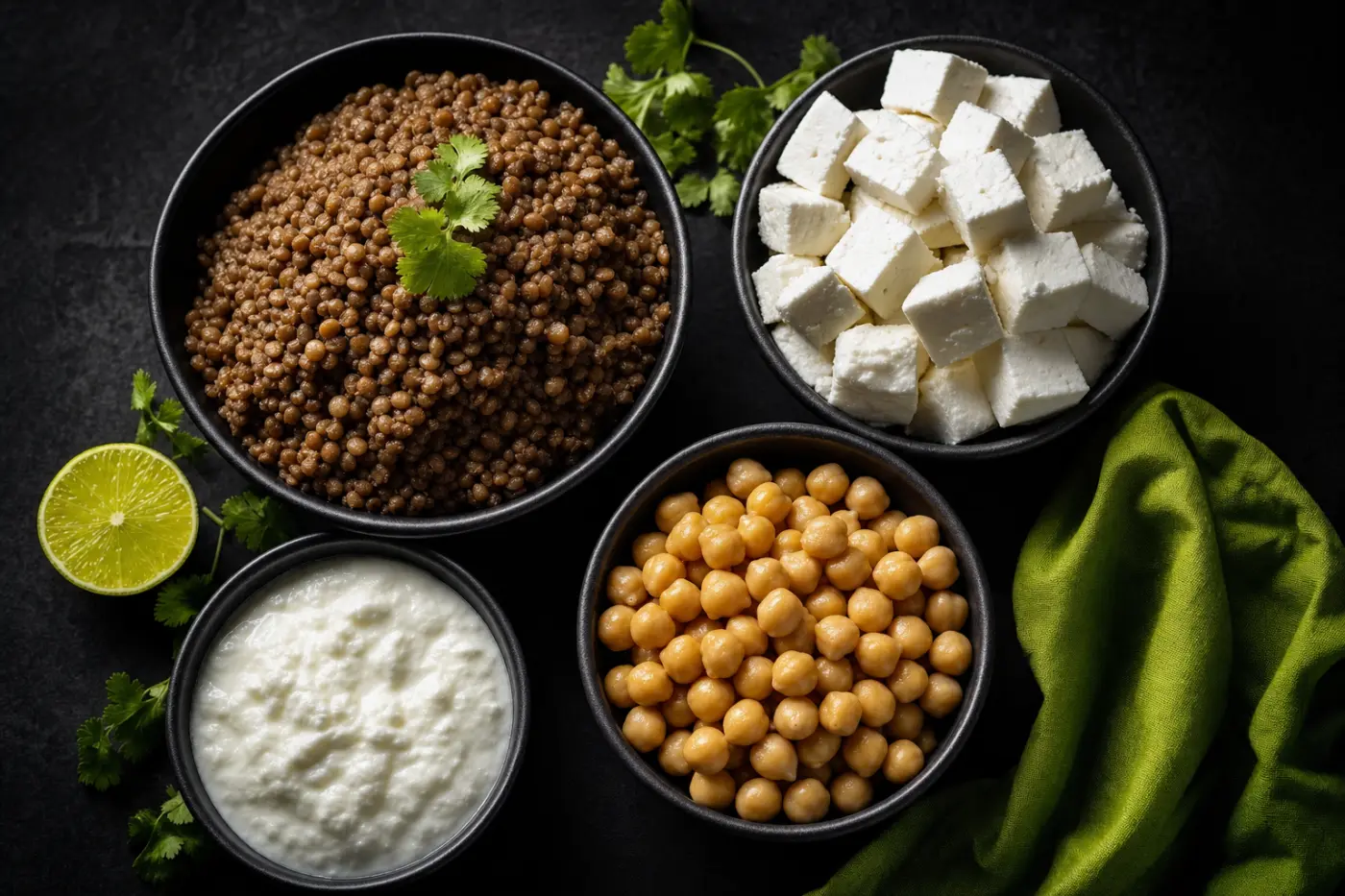
- Dairy is the vegetarian athlete's biggest advantage. Paneer, curd and milk are complete and leucine-rich.
- Combining grains and legumes across the day covers the amino acid gaps.
- Soy and dairy are the two plant-friendly complete proteins worth building around.
- The practical barrier is usually breakfast, which is where most vegetarian days lose 20 to 30 g.
The claim that you cannot build muscle without meat is wrong, and the claim that plant and animal protein are identical is also wrong. The useful answer sits between them, and it is more practical than either.
For an Indian vegetarian athlete in particular, the situation is considerably better than the internet suggests — because dairy does most of the heavy lifting.
Why the target goes up
Two genuine differences, both modest, both worth accounting for.
Digestibility. Plant proteins are generally somewhat less digestible than animal proteins, partly because of fibre and antinutrients. Some of what you eat does not become available.
Amino acid profile, and leucine specifically. Muscle protein synthesis is triggered particularly by leucine, and most plant proteins contain proportionally less of it than animal proteins. Many are also limiting in one essential amino acid — legumes tend to be lower in methionine, grains lower in lysine.
The correction: aim 10 to 20% higher than the standard target.
| Omnivore | Vegetarian | |
|---|---|---|
| Maintenance | 1.6 g/kg | 1.8 g/kg |
| Building | 1.8–2.2 g/kg | 2.0–2.4 g/kg |
| In a deficit | 2.0–2.4 g/kg | 2.2–2.6 g/kg |
For a 70 kg athlete building, that is roughly 140 to 170 g a day. Achievable, and it requires planning rather than heroics. The underlying targets are argued in how much protein do you actually need.
The complementary protein point, corrected
The old advice was that you must combine grains and legumes in the same meal to form a complete protein.
That has been substantially revised. Your body maintains a pool of free amino acids, so combining across the day is sufficient. Rice at lunch and dal at dinner works fine.
The underlying principle still holds — a diet built on one plant protein source will be limiting in something. A varied one will not. Which happens to describe a normal Indian vegetarian diet quite well: dal with rice or roti, several times a day, is the complementary protein pattern working by default.
The sources that actually matter
Dairy is the vegetarian athlete's advantage, and it is worth being explicit about how large it is. Dairy proteins are complete, highly digestible and leucine-rich. A lacto-vegetarian has almost no meaningful disadvantage.
| Food | Protein per 100 g | Note |
|---|---|---|
| Paneer | ~18 g | Complete, high leucine, calorie-dense |
| Greek yoghurt / hung curd | ~9 g | Excellent, very satiating |
| Curd (dahi) | ~3–4 g | Low per 100 g — the volume is the issue |
| Milk | ~3.4 g | Adds up quickly across a day |
| Soya chunks (dry) | ~50 g | Extremely dense and cheap |
| Tofu | ~8–12 g | Complete protein |
| Lentils/dal (cooked) | ~9 g | Combine with grains |
| Rajma / chana (cooked) | ~8–9 g | Good, plus fibre |
| Whey protein | ~80 g | Convenient rather than necessary |
Soya chunks deserve a specific mention. They are one of the highest-protein, lowest-cost foods available anywhere, complete in amino acid profile, and they absorb whatever they are cooked in. For an athlete on a budget, they are close to unbeatable.
Note the trap in that table: curd is only 3 to 4 g per 100 g. A bowl of curd is not a protein source in any meaningful sense — it is 6 g. Hung curd or Greek yoghurt is a different food entirely.
The real problem is breakfast
Track a typical vegetarian Indian day and the protein shortfall is almost always in the morning.
- Poha: ~4 g
- Idli and sambar: ~8 g
- Paratha: ~6 g
- Upma: ~5 g
Lunch and dinner, with dal, curd and a vegetable, typically deliver 25 to 35 g each. Breakfast delivers five. That single meal is where a 150 g target quietly becomes 110 g.
Fixes, in order of ease:
- Add a protein shake. Simplest, most reliable, 25 g in thirty seconds
- Greek yoghurt or hung curd, 150 g, adds 15 g
- Paneer bhurji instead of aloo, adds 18 g
- Besan chilla instead of paratha — chickpea flour is roughly 20 g protein per 100 g
- Add soya chunks to upma or poha
- Two eggs, if you are ovo-vegetarian, adds 12 g
A day at 150 g
For a 70 kg athlete. Nothing exotic.
Breakfast — Besan chilla (2) with paneer filling, plus a glass of milk → ~32 g
Mid-morning — 150 g Greek yoghurt with fruit → ~15 g
Lunch — Rajma (1.5 cups) with rice, a bowl of curd → ~28 g
Pre-training — Whey shake in milk → ~30 g
Dinner — Paneer (150 g) with roti and dal → ~40 g
Before bed — A glass of milk → ~8 g
Total: roughly 153 g. One shake, no unusual foods, no supplements beyond the whey — and the whey is optional if you increase the paneer and curd.
For vegans
The gap is genuinely larger without dairy, but it is still a planning problem rather than a barrier.
- Anchor on soy. Tofu, soya chunks and tempeh are the complete, leucine-adequate options
- Use a blended plant protein powder — pea and rice together cover each other's limiting amino acids
- Go toward the top of the range, 2.2 to 2.6 g/kg when building
- Watch B12, iron, vitamin D, omega-3 and zinc, all of which need genuine attention on a vegan diet. Iron in particular matters for endurance athletes, and this is a case for testing rather than guessing — see the bloodwork athletes should actually check
The summary
Add 10 to 20% to your protein target. Anchor every meal on dairy or soy. Fix breakfast, which is where the day is usually lost. Vary your legumes and grains and the amino acid profile takes care of itself.
The vegetarian athlete's disadvantage is real, small, and entirely solved by paying attention to one meal a day.
Questions people ask
How much protein do vegetarian athletes need?
Roughly 10 to 20% above the standard athletic recommendation, so about 1.8 to 2.4 g/kg rather than 1.6 to 2.2 g/kg. The increase accounts for the lower digestibility of many plant proteins and their generally lower leucine content, which means a given gram total delivers slightly less usable building material.
Is plant protein as good as whey?
Gram for gram most single plant sources are slightly less effective, mainly because of lower leucine content and lower digestibility. The gap closes substantially when you eat more total protein, combine sources across the day, or use soy — and it disappears entirely for practical purposes if dairy is part of your diet.
What are the best vegetarian protein sources?
Paneer, Greek yoghurt and curd, milk, soy products including tofu and soya chunks, lentils and dals, chickpeas and rajma, and whey or soy protein powder. Soya chunks are unusually protein-dense and cheap; paneer and dairy are complete proteins with good leucine content.
How do you get 100g protein as a vegetarian?
It is straightforward with dairy and soy anchoring each meal — for example curd and a protein shake at breakfast, paneer or soya with a dal-and-rice lunch, and a legume-based dinner. The difficulty is almost never lunch or dinner; it is breakfast, where a typical vegetarian Indian breakfast can be very low in protein.
Do vegetarians need more protein?
Slightly more than an omnivore eating the same training load, yes, for digestibility and amino acid profile reasons. The difference is real but modest, and it is entirely manageable — it does not require unusual foods, just deliberate inclusion of dairy, soy and legumes at each meal.
Keep reading
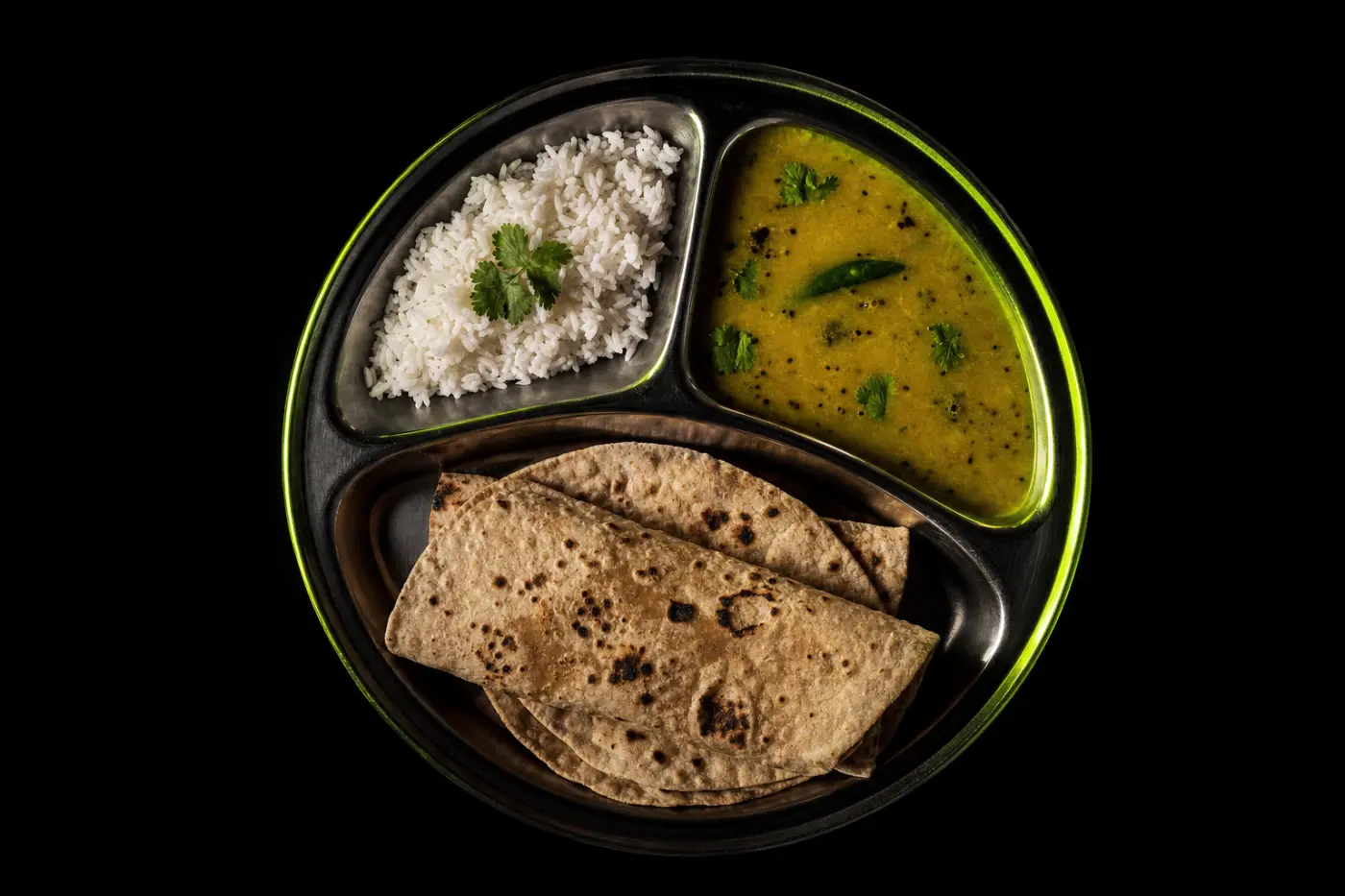
The Indian Athlete's Macro Guide: Dal, Roti, Rice and Real Numbers
Most macro guidance assumes chicken breast and oats. This one is built on the food actually on your table — with per-serving numbers for the staples and three worked days at different calorie targets.
What 100g of Protein Actually Looks Like (Veg and Non-Veg)
Numbers on a screen are abstract. Volume on a plate is not. Two full days of eating counted out, so you know what a hundred grams feels like before you try to eat two hundred.
Alcohol and Training: What One Night Actually Costs
The effects on sleep architecture, protein synthesis, hydration and next-day performance, with the honest magnitudes attached. What a couple of drinks costs versus a heavy night, and how to time it around a training week.