VO2 Max: What It Is and How to Actually Raise It
Your watch's estimate, what the number physiologically means, how much of it is trainable versus inherited, and the two session types that move it. Plus the honest answer on how much it matters once you are past beginner.
- VO2 max is the ceiling on aerobic energy production, not a complete measure of fitness.
- Watch estimates track trends reasonably well and absolute values poorly.
- Large gains come early. Trained athletes move it slowly and by small margins.
- Long intervals at hard-but-controlled effort are the most reliable way to raise it.
- Past beginner level, threshold and economy predict race performance better than VO2 max does.
VO2 max has become the fitness number of the moment — displayed on watches, quoted in longevity podcasts, and increasingly treated as a single score for how healthy you are.
It is a genuinely important physiological measure. It is also frequently misread, and past a certain point it is not the number that decides your races.
What it actually is
VO2 max is the maximum rate at which your body can take in, transport and use oxygen, usually expressed in millilitres of oxygen per kilogram of bodyweight per minute.
Think of it as the size of your aerobic engine — the ceiling on how much energy you can produce aerobically. Everything below that ceiling is available to you; nothing above it is.
The system has three links, and the number is set by whichever is weakest:
- Getting oxygen in — lungs. Rarely the limiter in healthy people.
- Moving it around — heart, blood volume, haemoglobin. This is usually the limiter, and specifically the heart's stroke volume.
- Using it — mitochondrial density and capillarisation in the muscle.
Because the middle link dominates, most training that raises VO2 max works by making the heart a better pump.
How it is measured, and what your watch is doing
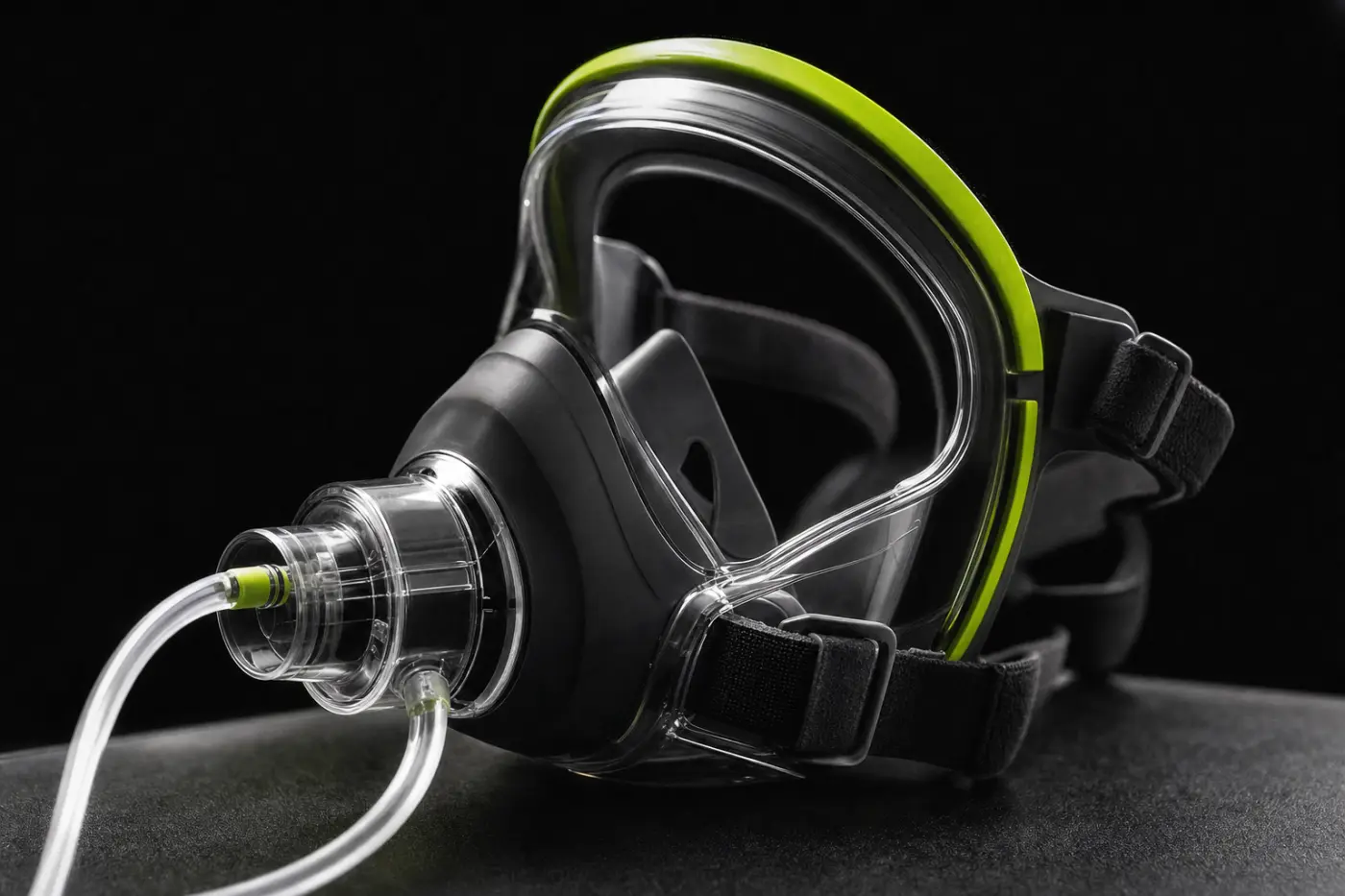
A real test involves a mask, a treadmill or bike, a ramp protocol to exhaustion, and analysis of expired gases. It is unpleasant and accurate.
Your watch is doing something else entirely. It observes the relationship between your pace and your heart rate during easy and moderate running, and infers what your maximum would be. That inference depends on assumptions about your maximum heart rate, your running economy and your resting values — all of which vary between individuals.
The practical consequence:
- The absolute number can be meaningfully wrong, in either direction
- The trend is reasonably informative. If it moves up over a twelve-week block, you probably got fitter
- Day-to-day movement is noise. Ignore it entirely
Treat it the way you would treat a bathroom scale: useful weekly, meaningless daily.
How much is trainable
Some of your VO2 max is inherited. Studies of training response consistently find large individual variation — the same programme produces substantial gains in some people and modest gains in others, and a portion of that is genetic.
That said, the trainable range is large enough to matter enormously:
- Untrained beginners commonly improve substantially within a few months
- Recreationally trained athletes improve slowly, by a few percent a season
- Highly trained athletes are often near their ceiling and improve barely at all
Which produces an important implication. If you are new to training, VO2 max is a useful thing to chase because it will move. If you have been training seriously for years, chasing it is mostly frustrating — and it is no longer what limits your performance.
The two sessions that raise it
1. Long intervals — the primary tool.
Three to five minutes of hard work, repeated, with recoveries roughly equal to or slightly shorter than the work.
- 5 × 3 minutes hard, 2–3 minutes easy between
- 4 × 4 minutes hard, 3 minutes easy between
- 5 × 1000 m at roughly 5K effort
The specific intent is to accumulate time at or near VO2 max, and the reason the intervals are long is that it takes a couple of minutes of hard work to get there at all. Very short intervals never arrive.
The effort should be hard but repeatable — you should be able to complete the last rep at close to the first rep's pace. If rep four collapses, you started too fast and spent the session on something else.
2. Threshold work — the base underneath.
Raising your threshold raises the sustainable fraction of your ceiling, and over time contributes to the ceiling itself. Practically it is 20 to 30 minutes continuous at comfortably-hard, or 4 × 8 minutes.
And underneath both: easy volume. The cardiovascular adaptations that raise stroke volume come substantially from sustained easy work. Intervals sharpen an engine that easy running builds. Doing intervals on a small base produces a brief improvement and then a plateau.
How to structure it
For a hybrid athlete, one VO2 max session every week to ten days is plenty, and every other week is often better — the session is expensive in recovery and competes directly with heavy lifting.
A workable rotation:
- Week A: VO2 max intervals
- Week B: Threshold
- Every week: easy volume, one long session, lifting unchanged
Do not run these sessions the day before or after a heavy lower-body day. The interference is real when the sessions are stacked, which is the scheduling problem covered in how to structure a hybrid training week.
The honest part: how much does it matter
For health outcomes, quite a lot. Cardiorespiratory fitness is among the more robust predictors of long-term health in population research, and moving from the bottom of the distribution toward the middle is associated with substantial benefit. If you are unfit, this number is worth improving.
For race performance, less than people assume once you are trained.
Two runners with identical VO2 max can differ by many minutes over a half marathon, because performance depends on three things:
- VO2 max — the ceiling
- Threshold — what fraction of the ceiling you can sustain
- Economy — how much oxygen a given pace actually costs you
Past beginner level, threshold and economy are the more trainable and more predictive of the three. This is why a fixation on the watch's VO2 max estimate often misdirects training — people add intervals when their limiter is that they have never trained economy or built a base. Economy in particular responds to heavy strength work rather than to more intervals, which is the case made in the only six lifts a runner needs.
The summary
Know what it is: your aerobic ceiling, mostly set by your heart's pumping capacity.
Know what your watch is telling you: a trend, not a measurement.
Know how to raise it: long intervals, threshold work, and a great deal of easy volume underneath both.
And know when to stop caring about it: once you are reasonably trained, the number that decides your races is not the size of your engine but how much of it you can use for two hours — and that is a different training problem with a different solution.
Questions people ask
What is a good VO2 max?
For untrained adults, values in the mid-30s to mid-40s ml/kg/min are typical, with recreational endurance athletes commonly in the high 40s to high 50s and well-trained ones above that. Elite endurance athletes reach the 70s and 80s. Values decline with age and are lower on average in women, so compare within your own age and sex rather than against a general figure.
How do you increase VO2 max?
Two session types do most of the work: long intervals of three to five minutes at a hard but controlled effort, and sustained threshold work that raises the base underneath. Both sit on top of easy aerobic volume, which is what actually builds the cardiovascular machinery those sessions then sharpen.
How accurate is watch VO2 max?
The absolute number is an estimate derived from your heart rate and pace, and it can be off by a meaningful margin. What it does reasonably well is track direction — if it climbs over a training block, you probably improved. Treat it as a trend line, not a measurement, and ignore day-to-day movement entirely.
How long does it take to improve VO2 max?
Untrained people often see substantial improvement within six to twelve weeks of consistent training. Trained athletes improve far more slowly, by a few percent over a season, because they are already close to their trainable ceiling. Most of the easy gains happen in the first year of serious training.
Does VO2 max decline with age?
Yes, gradually from roughly the third decade onward, though a substantial part of the commonly observed decline is disuse rather than ageing itself. Masters athletes who keep training hard decline far more slowly than the population average, and the intensity of training appears to matter more than the volume for preserving it.
Keep reading

Periodisation for People With Jobs: A Realistic 16-Week Block
Textbook periodisation assumes you control your calendar. You do not. A 16-week structure built for six-hour training weeks, unpredictable travel, and the fact that some weeks you will simply not train.
What Is a Hybrid Athlete, Actually?
The term has gone from niche to marketing slogan in about four years. A working definition, the standards that separate genuine hybrid capacity from being moderately good at two things, and why the label matters less than the trade-off underneath it.
Concurrent Training: How to Build Strength and Endurance at the Same Time
Lifting and running in the same week is not a compromise — it is a scheduling problem. What the research says about sequencing, volume and recovery, and how to turn it into a week you can actually run.