Cadence, Stride and Running Form: What's Worth Changing
Most form advice is cosmetic. Two variables genuinely change your injury risk and economy, and the rest is largely self-organising. What to cue, what to leave alone, and how long a real change takes to stick.
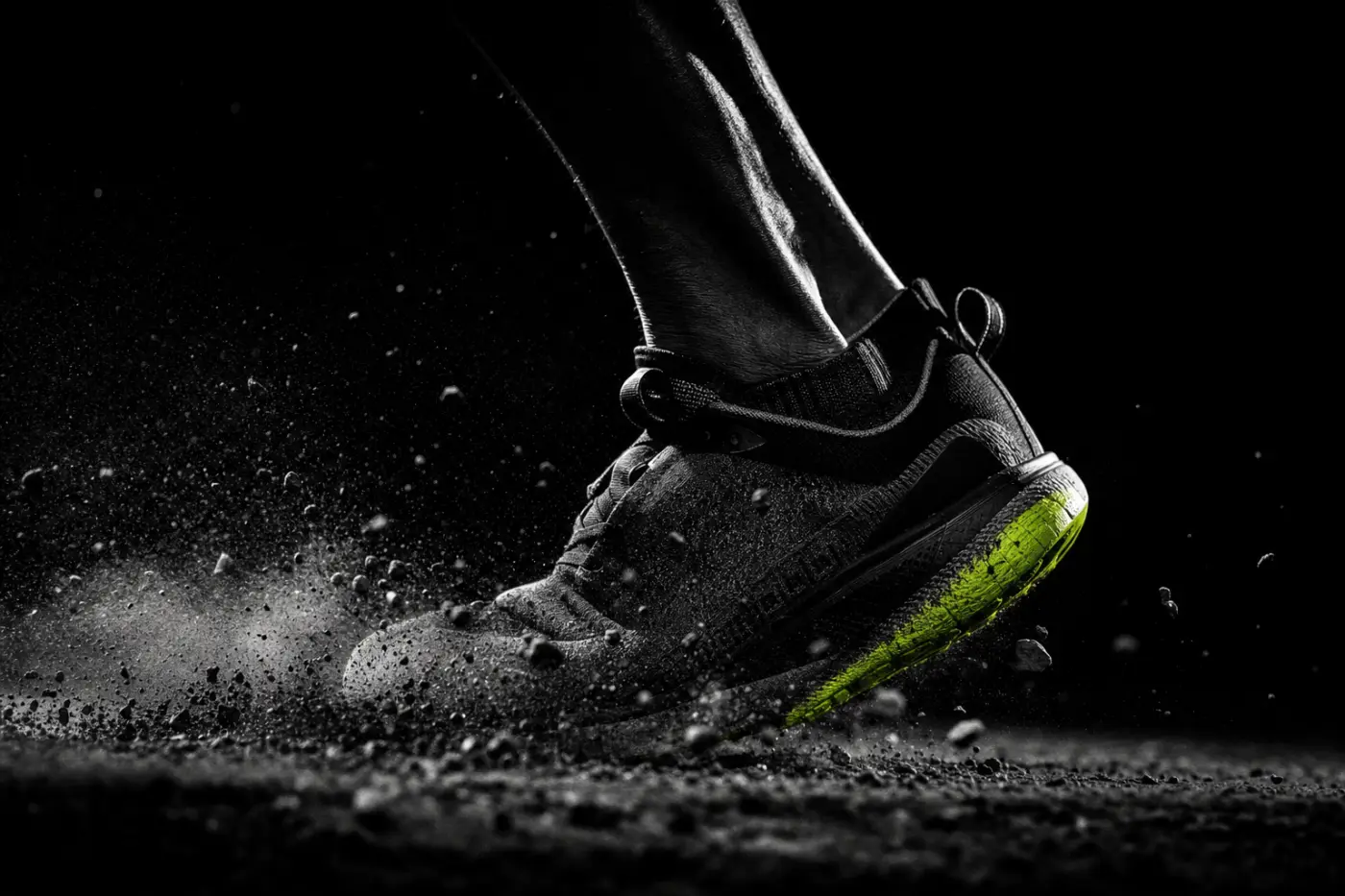
- Two things are worth changing: how far in front of your body you land, and how often you land.
- 180 steps per minute is not a universal target — it came from observing elite racers, who are running much faster than you.
- Raising cadence 5 to 10% is the safest single intervention for shin, knee and hip pain.
- Foot strike is mostly a consequence of where you land relative to your hips, not a thing to cue directly.
- A real form change takes six to twelve weeks of deliberate practice on easy runs before it survives fatigue.
Running form is the single most over-coached topic in endurance sport. There is an enormous amount of advice about arm angles, foot strike, forward lean, hip drive and posture — and most of it describes what fast runners look like rather than what made them fast.
The evidence supports intervening on roughly two things. Everything else is either self-organising, individually optimal already, or so deeply wired that trying to override it does more harm than good.
The two things worth changing
1. Where you land relative to your hips
This is the one that matters most, and it has a name: overstriding.
If your foot lands well ahead of your centre of mass, you are doing two bad things at once. You are applying a braking force with every step, which costs energy and slows you down. And you are absorbing that impact through a relatively straight leg, which sends load up the shin, into the knee and onward.
The fix is not "land on your forefoot". You can overstride perfectly well on a forefoot landing. The fix is to land closer to underneath yourself — and the easiest way to achieve that is indirect, via cadence.
2. How often you land
Cadence — steps per minute — is the lever, because increasing it shortens your stride automatically. You cannot take more steps per minute at the same pace without each step covering less ground, and a shorter stride lands closer to your body.
That is why cadence is the most-recommended running intervention: it fixes overstriding without asking you to think about your feet mid-run.
The 180 myth
Almost everyone has heard that 180 steps per minute is the target. It comes from Jack Daniels counting the cadence of elite distance runners at the 1984 Olympics and observing that nearly all of them were at or above 180.
Two things get lost in the retelling. Those athletes were racing, at paces between 2:50 and 3:10 per kilometre. And cadence rises with speed for everyone — your own cadence at 4:00/km is meaningfully higher than at 6:30/km.
So telling a recreational runner plodding at 6:30 to hit 180 is comparing them to someone running twice as fast. Height matters too: a 190cm runner will naturally turn over more slowly than a 160cm runner at identical pace, and neither is wrong.
The useful target is relative, not absolute: aim for 5 to 10% above your own current cadence. If you currently run at 160, aim for 168 to 176. That is enough to shorten the stride meaningfully and is a change your body can absorb.
How to actually change it
Measure first. Most watches report cadence; if yours does not, count your right footfalls for 30 seconds on an easy run and multiply by four. Do it at your normal easy pace, not consciously — the moment you think about it, you change it.
Then:
- Only on easy runs. Never introduce a form change during a hard session. You will revert under fatigue and reinforce nothing.
- Use a metronome. A metronome app, or a playlist at the target BPM. External rhythm works far better than internal counting.
- Hold effort constant, not pace. Higher cadence at the same effort should feel like shorter, lighter steps — not like running faster. If your pace jumps, you have raised effort instead of turnover.
- Five percent at a time. Then two to three weeks at that cadence before another increase.
- Expect it to feel silly. Shorter, quicker steps feel like you are shuffling. That feeling fades in about two weeks.
What to leave alone
Foot strike. Consciously switching from heel to forefoot moves load from the knee to the calf and Achilles, which is a trade, not an improvement — and it is the single most common cause of new Achilles problems in recreational runners. Fix the overstride and your foot strike will often adjust on its own.
Arm carriage. Unless your arms are crossing your midline substantially, leave them. The energetic cost of suboptimal arm swing is small and the coordination is deeply wired.
Forward lean. "Lean from the ankles" is a common cue that mostly produces people bending at the waist, which is worse than whatever they were doing before.
Anything you cannot feel. If a change requires you to concentrate on it every stride, it will not survive kilometre eighteen, which is when you need it most.
How long it takes
Longer than people expect. A cadence change takes roughly six to twelve weeks of consistent easy-run practice before it becomes the default — meaning it holds when you are tired, on a hill, and not thinking about it.
That is the real test. A form change that only exists when you are concentrating is not a form change; it is a party trick.
The honest ranking
If you are dealing with recurring shin, knee or hip pain, raising your cadence 5 to 10% is the highest-value, lowest-risk intervention available, and it is free.
If you are chasing performance, it is worth doing but it is not the biggest lever. In descending order of what actually makes people faster:
- Consistent weekly volume — by a distance
- Easy runs actually run easy — see why your 5K is stuck
- Heavy strength training twice a week — improves running economy directly
- Cadence and overstride correction
- Everything else you have read about form
Most people spend their attention in exactly the reverse order, because form is visible and volume is boring.
Questions people ask
What is a good running cadence?
There is no single correct number. Cadence rises naturally with speed, and taller runners turn over more slowly than shorter ones at the same pace. A more useful target than a fixed figure is a 5 to 10% increase on your own current cadence, which is enough to shorten your stride and reduce impact loading without disrupting your mechanics.
Is 180 steps per minute a real rule?
It is a misapplied observation. Jack Daniels counted the cadence of elite distance runners at the 1984 Olympics and found almost all were at or above 180 — while racing, at paces far faster than most people ever run. Applying that number to a recreational runner at 6:00 per kilometre is comparing two different situations.
Does heel striking cause injury?
Heel striking itself is not the problem, and plenty of efficient runners heel strike. The issue is overstriding — landing with the foot well ahead of your centre of mass, which acts as a brake and sends a sharp impact up the chain. You can heel strike safely underneath yourself, and you can overstride on a forefoot landing.
How do you increase cadence safely?
Change it on easy runs only, using a metronome app or a music playlist at the target beats per minute. Increase by no more than 5% at a time, hold it for two or three weeks, then reassess. Keep effort constant rather than pace — a higher cadence at the same pace should mean shorter strides, not faster running.
Can you change your running form as an adult?
Yes, but slowly and only for specific variables. Cadence and stride length are trainable and respond within weeks. Deep motor patterns like arm carriage and pelvic mechanics are far more resistant and, for most people, not worth the effort of trying to override.
Keep reading

Hill Training: The Cheapest Speed Work There Is
Hills build strength, running economy and top-end power at a lower injury cost than flat speed work. Four session formats, the gradient that suits each, and how to run downhill without paying for it the next week.
Shin Splints, Runner's Knee and Plantar Fasciitis: Prevention That Works
Three injuries that account for most of the running people miss, all largely caused by load rising faster than tissue can adapt. The early warning signs, the loading protocols that resolve them, and when to stop running entirely.

Treadmill vs. Outdoor Running: What Actually Transfers
Treadmill running is not cheating, but it is not identical either. The measurable differences in mechanics, effort and pace, the incline setting that closes most of the gap, and when the treadmill is genuinely the better choice.