Shin Splints, Runner's Knee and Plantar Fasciitis: Prevention That Works
Three injuries that account for most of the running people miss, all largely caused by load rising faster than tissue can adapt. The early warning signs, the loading protocols that resolve them, and when to stop running entirely.
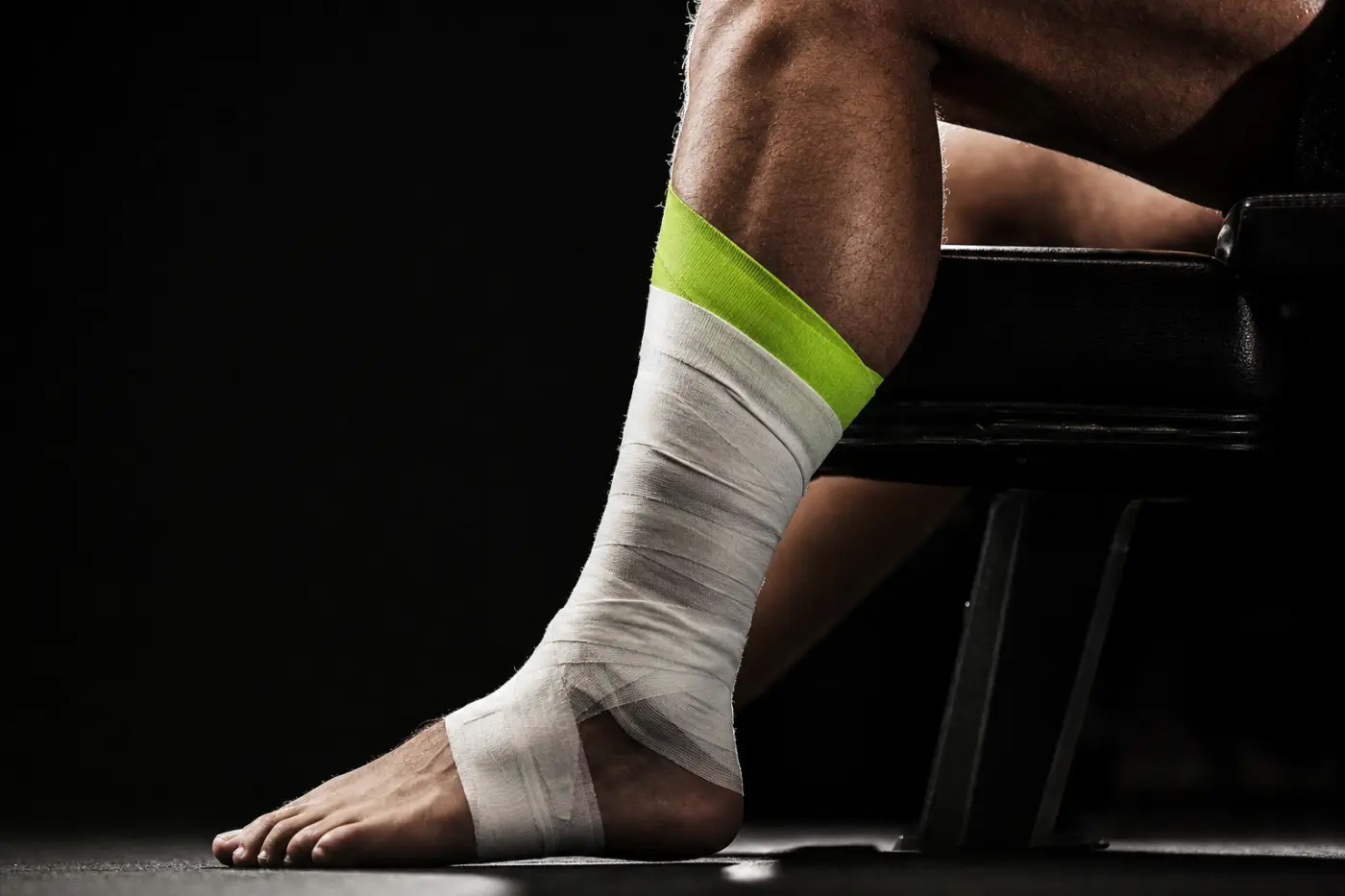
- Nearly all three come from load rising faster than tissue adapts — bone, tendon and fascia adapt slower than muscle and heart.
- Strength work is the best-evidenced prevention for all three, and the most commonly skipped.
- Rest alone rarely fixes them. Progressive loading does.
- Raising cadence 5 to 10% reduces impact loading and helps all three.
- Pain that worsens during a run, or persists at rest, means stop and get it assessed.
Most running injuries are not accidents. They are load management failures with a delay built in, which is what makes them so easy to walk into.
Your heart and lungs adapt to training in weeks. Muscle adapts in weeks to months. Bone, tendon and fascia adapt over months. So when you add 30% to your weekly mileage, your cardiovascular system says yes immediately, your muscles cope, and your tibia and plantar fascia quietly fall behind. Four to six weeks later, something hurts.
That delay is why people say the injury "came out of nowhere". It came out of March.
This is general information, not a diagnosis. Pain that is sharp, worsening, or present at rest needs a physiotherapist or a doctor, not an article.
Shin splints (medial tibial stress syndrome)
What it feels like: a diffuse ache along the inner edge of the shin, sore to press over a broad area. Hurts at the start of a run, sometimes eases in the middle, worse afterwards.
What causes it: repetitive bone loading beyond what the tibia has adapted to. Common contributors are a rapid mileage increase, a surface change, worn shoes, weak calves and low cadence with a long stride.
What actually helps:
- Cut volume, do not stop entirely. Bone responds to load; complete rest removes the adaptation stimulus. Reduce until you can run pain-free, even if that is very little.
- Calf strength, heavily. Straight-leg and bent-knee calf raises, progressing to single-leg with load. Three sets to near failure, three times a week. This is the highest-yield intervention.
- Raise cadence 5 to 10%, which shortens the stride and cuts impact loading. See cadence and running form.
- Check your shoes' mileage. Most road shoes are done between 500 and 800 km.
The red flag: if the pain narrows to a specific point you can cover with a fingertip, and hurts when hopping on that leg, stop running and get it imaged. That pattern suggests a bone stress injury, and running through a stress fracture turns six weeks into six months.
Runner's knee (patellofemoral pain)
What it feels like: an ache around or behind the kneecap. Worse going downstairs, worse sitting with the knee bent for a long time, worse on downhill running.
What causes it: how the kneecap tracks under load, which is driven far more by hip and quad strength and control than by anything at the knee itself. Weak glutes let the femur rotate inward, which changes the angle the patella runs in.
What actually helps:
- Hip and glute strength. Single-leg work above all: split squats, step-downs, single-leg RDLs, lateral band walks. Twice a week, loaded properly.
- Quad strength through range. Leg press, squats, Spanish squats. Strong quads are protective, not a cause.
- Reduce downhill volume temporarily — it is the highest-load scenario for the patellofemoral joint.
- Raise cadence, again. Shorter stride, less knee flexion at contact.
- Keep running at a volume that does not provoke it. Pain up to about 3 out of 10 during a run, settling within 24 hours, is generally acceptable in current rehab thinking.
The mistake: stretching the IT band, foam rolling it aggressively, and buying a knee strap. None of these address hip strength, which is where the problem generally lives.
Plantar fasciitis
What it feels like: sharp pain under the heel with the first steps out of bed. Eases as you move, returns after sitting. This morning-pain pattern is close to diagnostic.
What causes it: overload of the plantar fascia, often with tight or weak calves as a driver, and frequently associated with a sudden increase in volume, hill work or speed work.
What actually helps:
- Heavy, slow calf raises with the toes elevated. Roll a towel under the toes so they are dorsiflexed, then do slow, heavy calf raises. This specific protocol has reasonable evidence behind it. Three sets, slow tempo, every other day.
- Progressive loading, not rest. Fascia and tendon respond to load. Extended rest tends to feel better and resolve slower.
- Calf and foot mobility, including rolling the sole on a ball — helpful for symptoms, not a fix.
- Supportive shoes in the short term, and avoid being barefoot on hard floors while it settles.
Expect it to take time. Plantar fasciitis is famously stubborn — three to six months is a normal timeline even when you do everything right. Starting the loading protocol early is what shortens it.
What prevents all three
The same short list, which is why it is worth taking seriously.
1. Build volume slowly. Roughly 10% a week, with a down week every fourth. Boring, and it is the single most effective thing on this page.
2. Lift twice a week. Heavy, low volume, single-leg biased. Calf raises, split squats, hinges, step-downs. This is the best-evidenced injury prevention in distance running and the thing most runners skip. See the only six lifts a runner needs.
3. Run easy runs easy. Most overuse injury accumulates on the days that were supposed to be recovery. This is the same failure that causes performance plateaus — see why your 5K time is stuck.
4. Raise cadence if yours is low. Free reduction in impact loading.
5. Eat enough. Bone adaptation requires energy, calcium and vitamin D. Runners in chronic deficits get stress injuries at markedly higher rates.
6. Do not change more than one thing at a time. New shoes, new surface, new volume and new speed work in the same fortnight makes the cause unidentifiable and the injury likely.
When to stop and see someone
- Pain that increases during a run rather than easing after the first kilometre
- Pain present at rest or at night
- Pain that localises to a small point on a bone
- Any swelling
- A limp, or a change in gait to avoid the pain
- Something that has not improved after two weeks of sensible load reduction
Running through those does not build toughness. It converts a manageable problem into a long one.
The uncomfortable truth about all three of these injuries is that the fix is nearly always the thing you were already supposed to be doing: build slowly, lift twice a week, run your easy runs easy. The rehab protocol and the prevention protocol are almost the same document.
Questions people ask
What causes shin splints?
Repetitive bone loading beyond what the tibia has adapted to. Bone, tendon and fascia adapt over months while your cardiovascular system adapts in weeks, so a rapid mileage increase shows up as pain four to six weeks later. Common contributors are surface changes, worn shoes, weak calves and low cadence with a long stride. Heavy calf work is the highest-yield fix.
Can you run through runner's knee?
Often yes, at a volume that does not provoke it — pain up to about 3 out of 10 during a run that settles within 24 hours is generally acceptable in current rehab thinking. The actual fix is hip and glute strength plus quad strength through range, since patellar tracking is driven far more by the hip than by the knee. Stretching the IT band and buying a knee strap address none of that.
How long does plantar fasciitis take to heal?
Three to six months is a normal timeline even when you do everything right. Starting the loading protocol early is what shortens it: heavy, slow calf raises with the toes elevated on a rolled towel, three sets at slow tempo every other day. Fascia responds to load, so extended rest tends to feel better and resolve slower.
How much should you increase weekly mileage?
Roughly 10% a week, with a down week every fourth. It is boring and it is the single most effective injury-prevention measure available. Also avoid changing more than one thing at a time — new shoes, new surface, new volume and new speed work in the same fortnight makes the cause unidentifiable and the injury likely.
Do new shoes fix running injuries?
Rarely on their own, though worn-out shoes are a genuine contributor — most road shoes are done between 500 and 800 km. The interventions that actually work are building volume slowly, lifting twice a week with a single-leg bias, running easy runs easy, raising cadence if yours is low, and eating enough to support bone adaptation.
Keep reading
Cadence, Stride and Running Form: What's Worth Changing
Most form advice is cosmetic. Two variables genuinely change your injury risk and economy, and the rest is largely self-organising. What to cue, what to leave alone, and how long a real change takes to stick.

Hill Training: The Cheapest Speed Work There Is
Hills build strength, running economy and top-end power at a lower injury cost than flat speed work. Four session formats, the gradient that suits each, and how to run downhill without paying for it the next week.
How to Run a Sub-4 Hour Marathon: A Realistic 16-Week Plan
The pace, the weekly structure, the long run progression and the three sessions that matter. Written for someone who can already run 10 km and has a job, not for someone with unlimited time.