HYROX Gear: What's Worth Buying and What's a Waste of Money
Shoes matter enormously. Most of the rest does not. A category-by-category verdict on what actually changes your time, what changes your comfort, and what is simply expensive.
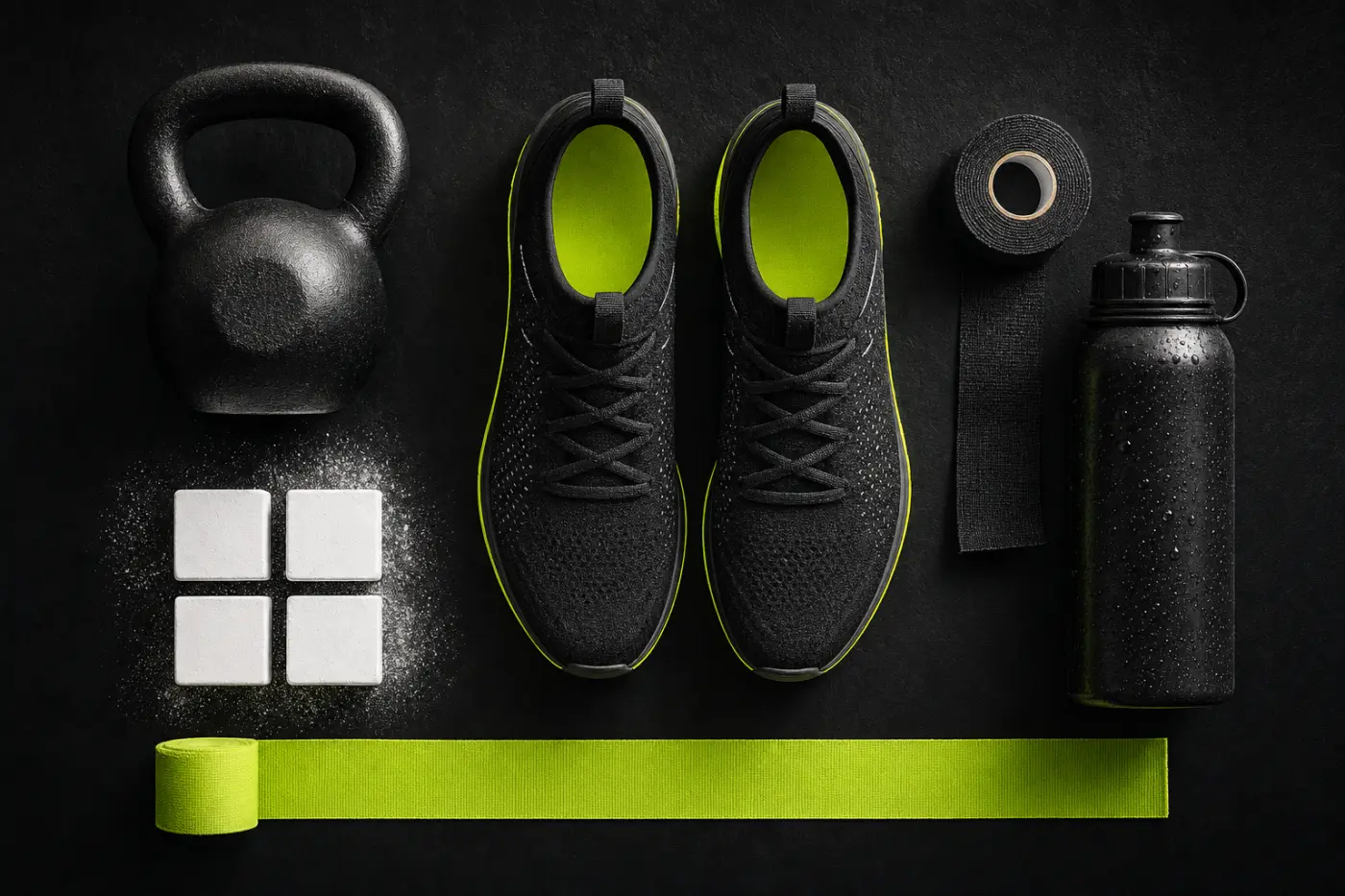
- Shoes are the only purchase that genuinely changes your time. Everything else is comfort.
- You need one shoe that runs well and grips a sled floor. Do not chase a specialist racing shoe.
- Never race in anything you have not trained in. This is the whole rule.
- Gloves are usually a mistake. Chalk and grip training do more.
- Rules on kit, weights and equipment vary by season and division — check the current official rules.
HYROX has developed a gear culture quickly, which is what happens when a sport gets popular and people would rather buy a solution than train one.
The honest version is short. One category meaningfully changes your finish time. Two or three change your comfort. The rest is merchandise.
A caveat first: what is permitted on the competition floor varies by season and division, and it changes. Everything below describes how to think about each category — check the current official rules before spending money on anything you intend to race in.
Shoes: the one that matters
Your shoes carry 8 km of running and eight stations, on an indoor surface, with a sled push somewhere in the middle. No other item touches that much of your race.
What you actually need is a compromise, and understanding the compromise is more useful than any specific recommendation.
- It has to run well. Eight kilometres is more than half your race. A shoe that is stable and grippy but runs like a brick will cost you far more than it saves.
- It has to grip laterally under load. The sled push is where a pure running shoe fails — you are driving horizontally, and a soft, rockered, high-stack racing shoe rolls and slips.
- It cannot be too soft or too tall. Maximum-cushion shoes feel wonderful for the first kilometre and unstable under a sled and through lunges.
- It has to be broken in. New shoes on race day is a blister and a bad afternoon.
The verdict: a moderate-stack, firm-ish, stable trainer that you enjoy running in. Several brands now make purpose-built hybrid racing shoes and they are genuinely good — but a well-chosen regular trainer you have run 200 km in beats a specialist shoe you bought last week, every time.
Worth the money? Yes. This is the one.
Socks
Unglamorous and disproportionately important. Eight kilometres plus lunges plus sweat is a blister scenario, and a blister at station four affects the rest of your race in a way no gear purchase can fix.
Technical running socks, fitted, never cotton. Whether they are compression socks is a preference — the performance evidence is thin, the comfort preference is real, and if you like them, wear them.
Worth the money? Yes, and it is a small amount of money.
Grip: chalk, gloves and straps
The farmers carry, the sled pull and the sandbag all tax your grip, and grip is where a lot of amateurs quietly lose time.
Chalk — permitted at most events in most divisions, usually with rules about type and where it can be applied. Cheap, effective, and worth confirming for your specific race.
Gloves — usually a mistake. They add a layer between you and the implement, which reduces the tactile feedback you use to grip efficiently, and they slide when wet with sweat. Most experienced athletes who tried gloves stopped.
Straps — not permitted for competition. Fine as a training tool for other lifts, irrelevant here.
What actually fixes grip is training it, which is cheaper than all of the above and considerably more effective. Dead hangs, heavy carries, and simply not using straps for your rows and deadlifts.
Worth the money? Chalk yes. Gloves no.
Clothing
Fitted, technical, and tested. That is the entire specification.
- Nothing loose — it catches on the sled harness and the sandbag
- Nothing cotton — it holds sweat and abrades
- Nothing new — chafing is discovered, not predicted
- Shorts with a small secure pocket if you are carrying anything
A weighted vest is not race kit — most divisions do not use one, and where a division does, the requirements are specified. For training it is useful for carries and running, but it is a nice-to-have rather than a need.
Worth the money? Buy decent, buy once, then stop thinking about it.
Training equipment
The question people actually mean: what should I buy so I can train for this at home?
The honest answer is that the highest-value purchases are not HYROX-specific at all — adjustable dumbbells, a pull-up bar and eventually a rower cover most of it, and the full ordering is in how to build a home gym for hybrid training.
What you cannot buy your way around is sled and SkiErg access. No home substitute replicates them. Budget for a few sessions at an equipped gym instead of buying equipment that approximates the demand.
Worth the money? Spend it on gym access before equipment.
What makes no difference to your time
Stated plainly, because a lot of money moves through this category.
Compression garments. Comfortable, possibly helpful for post-race soreness perception, no meaningful effect on performance.
Elaborate pre-workout stacks. Caffeine works. The other eleven ingredients are mostly there to justify the price.
Recovery boots. Pleasant. Not a training input.
Branded race kit. You will look like you belong. You will not be faster.
A second pair of shoes for the runs. You cannot change shoes mid-race.
None of these are scams exactly — several are genuinely pleasant. They just belong in the category of things you buy because you enjoy the sport, not because they change the outcome.
The single rule
If you take one thing from this page:
Never race in anything you have not trained in.
Not the shoes, not the socks, not the shorts, not the chalk brand. Race day is the worst possible venue for discovering how something behaves at kilometre six, and the number of races compromised by a new item is far higher than the number improved by one.
Test everything in a full simulation session. Wear exactly that kit again on race day. That single habit is worth more than every purchase on this page combined — the same logic that makes a rehearsed pacing plan beat an improvised one.
Where the time actually is
Worth saying, since this is a shopping article.
The gap between a 95-minute race and an 85-minute race is not equipment. It is your compromised running pace, your sled pacing, and three minutes of roxzone discipline. Those are all free, all trainable, and all considerably less fun to buy.
Get shoes you have run in and socks that fit. Then go and train the running.
Questions people ask
What shoes are best for HYROX?
A moderate-stack, firm-ish, stable trainer that you genuinely enjoy running in. The shoe has to do two jobs — run 8 km well and grip laterally under a sled push — so pure racing shoes roll and slip while maximum-cushion shoes feel unstable through lunges. Purpose-built hybrid racing shoes are good, but a regular trainer you have run 200 km in beats a specialist shoe bought last week.
Do you need special gloves for HYROX?
No, and gloves are usually a mistake. They add a layer between you and the implement, reducing the tactile feedback you use to grip efficiently, and they slide when wet with sweat. Chalk is the better option where permitted, and training your grip with dead hangs and heavy carries does more than either.
Is a weighted vest worth it for HYROX training?
It is a nice-to-have rather than a need. A vest is useful in training for carries and running, but it is not general race kit — most divisions do not use one, and where a division does, the requirements are specified. Spend the money on gym access with a sled and SkiErg first.
Can you wear compression socks in HYROX?
Sock choice is largely a comfort decision, and compression socks are a reasonable one if you like them — the performance evidence is thin but the comfort preference is real. What matters far more is that socks are technical, fitted and never cotton, because 8 km plus lunges plus sweat is a blister scenario. Check current event rules for any kit restrictions.
What is not allowed on the HYROX floor?
Lifting straps are not permitted for competition, and rules around chalk type and application vary by event. Permitted kit, weights and equipment change between seasons and differ by division, so check the current official rules rather than relying on any article — including this one — before buying something you intend to race in.
Keep reading
HYROX vs. CrossFit vs. Spartan: Which Race Suits Your Body and Schedule?
Three very different sports that get lumped together. What each actually tests, the training hours each demands, the injury profiles, and how to pick the one you will still be doing in three years.

What a Good HYROX Time Actually Is: Benchmarks by Age and Division
Finishing times, age group percentiles and elite comparisons, plus the more useful question nobody asks: which of your splits is furthest from where it should be, and what that tells you to train.
HYROX Doubles vs. Singles vs. Relay: Which Should You Sign Up For?
The three formats demand genuinely different things — different pacing, different weaknesses exposed, different training. An honest comparison so your first entry is the right one.