Ice Baths and Sauna: What the Evidence Says for Strength and Endurance
Cold plunging after lifting appears to blunt the exact adaptation you trained for. Heat exposure appears to do the opposite for endurance. A timing-based guide to using both without cancelling your own work.
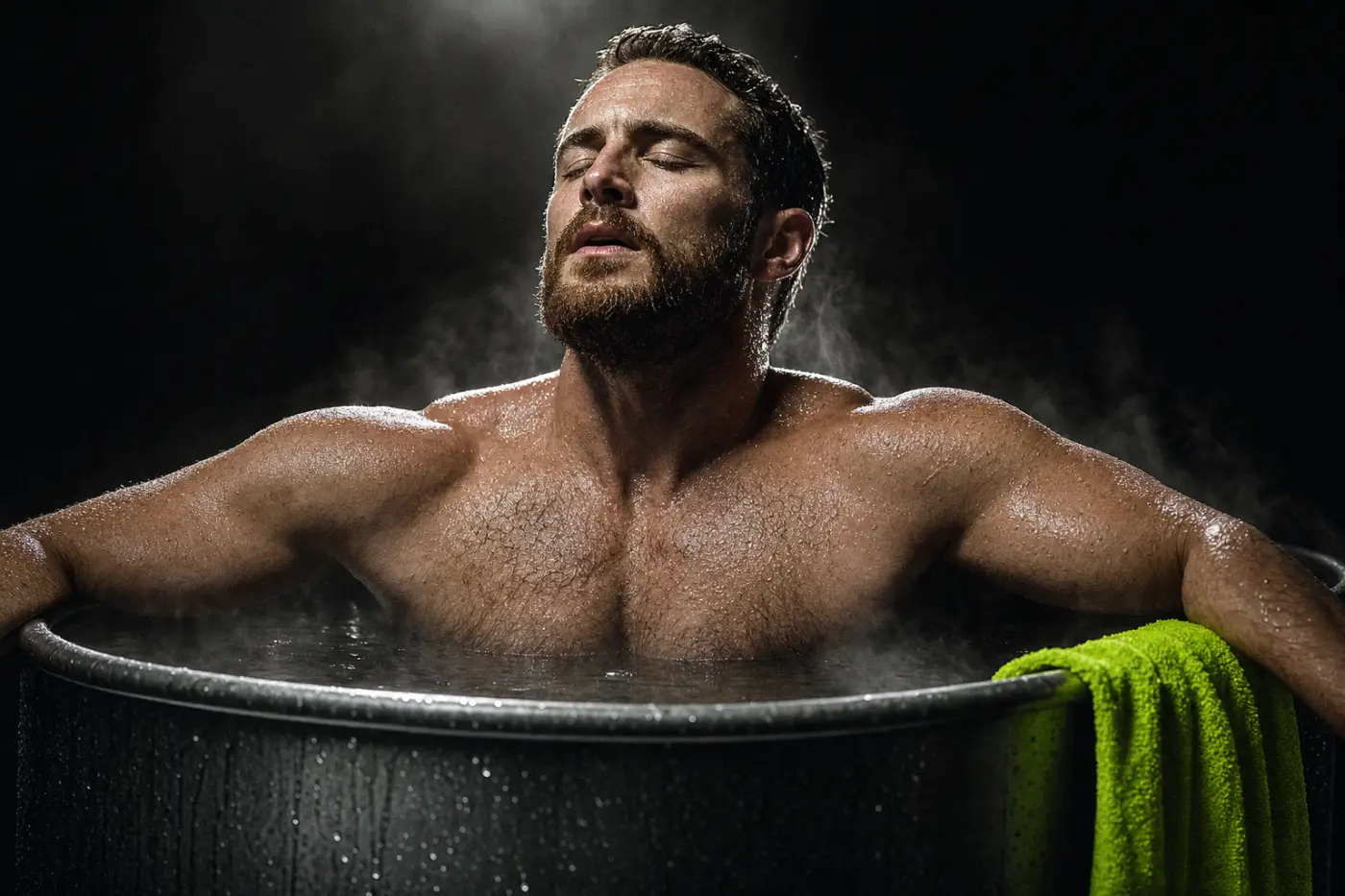
- Cold immersion right after resistance training can blunt strength and hypertrophy adaptations.
- Timing is the whole answer: cold is fine 6+ hours after lifting, or on rest days.
- Use cold when recovery beats adaptation — competition weeks, tournaments, back-to-back days.
- Sauna after endurance work drives plasma volume expansion, which is a genuine performance benefit.
- Heat acclimatisation from sauna transfers to hot-weather racing without the training cost.
Cold plunges and saunas occupy the same cultural space — recovery, discipline, a certain kind of morning routine — but the evidence for them points in genuinely opposite directions depending on what you are training for.
The short version: cold can undo your lifting. Heat can improve your endurance. Timing is what separates a useful tool from a self-inflicted wound.
Cold water immersion
What it does well. It reliably reduces perceived soreness and perceived fatigue, and it appears to help when you have to perform again soon — a tournament, a two-a-day, back-to-back race days. Those benefits are real and worth having in the right context.
The problem. A body of research now suggests that cold water immersion performed shortly after resistance training attenuates the strength and hypertrophy adaptations from that session.
The proposed mechanism is straightforward once stated. Resistance training causes a controlled inflammatory response, and that inflammation is part of the signal that tells the muscle to adapt — satellite cell activity, protein synthesis, remodelling. Cold immersion suppresses inflammation, which is precisely why it feels good. In doing so it appears to dampen the adaptive signal you just paid for.
Studies comparing cold immersion against active recovery after resistance training have found smaller gains in muscle size and strength in the cold groups over training blocks of several weeks.
So the plunge is not neutral after lifting. It is a trade — less soreness now, less adaptation later.
When cold is the right call
Use it when recovery matters more than adaptation:
- Competition day with another round tomorrow
- A tournament or a race weekend
- The middle of a deload where you are not chasing adaptation anyway
- Genuinely excessive soreness that is stopping you training at all
Avoid it when adaptation is the point:
- After a hypertrophy or strength session, within about six hours
- Through a strength-focused block, as a routine
The workable compromise: put six or more hours between the lift and the cold, or take it on rest days and after easy sessions. Most of the perceived-recovery benefit survives the delay; most of the interference does not.
Sauna
Here the direction reverses.
Heat exposure after endurance training drives plasma volume expansion — your blood volume increases, which raises stroke volume and improves cardiovascular efficiency. That is not a comfort benefit; it is a performance adaptation, and it is the same mechanism that makes altitude and heat training useful.
The other benefit is heat acclimatisation. If you are racing somewhere hot, sauna exposure produces many of the adaptations of training in heat — earlier and more dilute sweating, lower heart rate at a given workload — without having to do the training itself in dangerous conditions. That is genuinely useful for anyone racing an Indian summer marathon or a hot HYROX venue. The training-based version of this is covered in running in Indian heat.
A rough protocol from the acclimatisation literature: 15 to 30 minutes at around 80 to 90°C, immediately or soon after an endurance session, three to four times a week, for two to three weeks before the event. Build up. Hydrate properly, because you will lose a meaningful amount of fluid and sodium.
Does sauna interfere with lifting? The evidence here is thinner than for cold, and what exists does not suggest the same problem — heat does not suppress the inflammatory signalling in the way cold does. It is not clearly beneficial for strength either.
The summary table
| After lifting | After endurance | Rest day | |
|---|---|---|---|
| Cold plunge | Avoid within ~6h | Fine | Fine |
| Sauna | Neutral | Beneficial | Fine |
What this is really about
Both of these are second-order interventions, and it is worth keeping them in proportion.
The things that actually determine your recovery are sleep, food and how sensibly your training is arranged. A person sleeping six hours and eating in a deficit does not have a cold-exposure problem. Everything on this page is a rounding error next to those three, and no plunge protocol will compensate for missing them — the point made at more length in overtraining vs under-recovering.
But if the fundamentals are handled and you enjoy either of these, both are reasonable. Just do not take an ice bath straight after the squat session you did specifically to get stronger.
Questions people ask
Do ice baths blunt muscle growth?
Cold water immersion performed shortly after resistance training appears to attenuate strength and hypertrophy adaptations from that session. Training causes a controlled inflammatory response that is part of the signal to adapt, and cold suppresses that inflammation — which is precisely why it feels good. The plunge is a trade: less soreness now, less adaptation later.
How long after lifting can you ice bath?
Leave six or more hours between the lift and the cold, or take it on rest days and after easy sessions. Most of the perceived-recovery benefit survives the delay; most of the interference with adaptation does not.
Does sauna improve endurance?
Yes. Heat exposure after endurance training drives plasma volume expansion, which raises stroke volume and improves cardiovascular efficiency. That is a genuine performance adaptation rather than a comfort benefit, and it is the same mechanism that makes heat and altitude training useful.
Is cold plunging good for runners?
It is useful when recovery matters more than adaptation — race weekends, back-to-back days, tournaments, or soreness bad enough to stop you training at all. It is a poor idea within about six hours of a session you did specifically to get stronger.
Should you sauna before or after training?
After, and specifically after endurance work. A rough protocol from the acclimatisation literature is 15 to 30 minutes at around 80 to 90°C, three to four times a week for two to three weeks before a hot event. Build up gradually and hydrate, because you will lose a meaningful amount of fluid and sodium.
Keep reading
Deload Weeks: How to Know When You Need One (And What to Actually Do)
A deload is not a week off, and 'every fourth week' is not a plan. The specific signals that mean your body is asking for one, and three deload protocols matched to what is actually fatigued.

HRV, Explained Without the Hype: What Your Score Is Actually Telling You
Heart rate variability is a genuinely useful signal wrapped in a lot of marketing. What it measures, why absolute numbers are meaningless between people, and the only way to read yours that holds up.
Overtraining vs. Under-Recovering: How to Tell the Difference
True overtraining syndrome is rare and takes months to fix. What most athletes have is a recovery deficit that resolves in ten days. The markers that separate them, and why misdiagnosing it costs you a season.