Pull-Up Progression: From Zero to Ten
A staged plan that works whether you are at zero, at three, or stuck at six. The progressions that actually build the movement, the ones that waste months, and how often to train it.
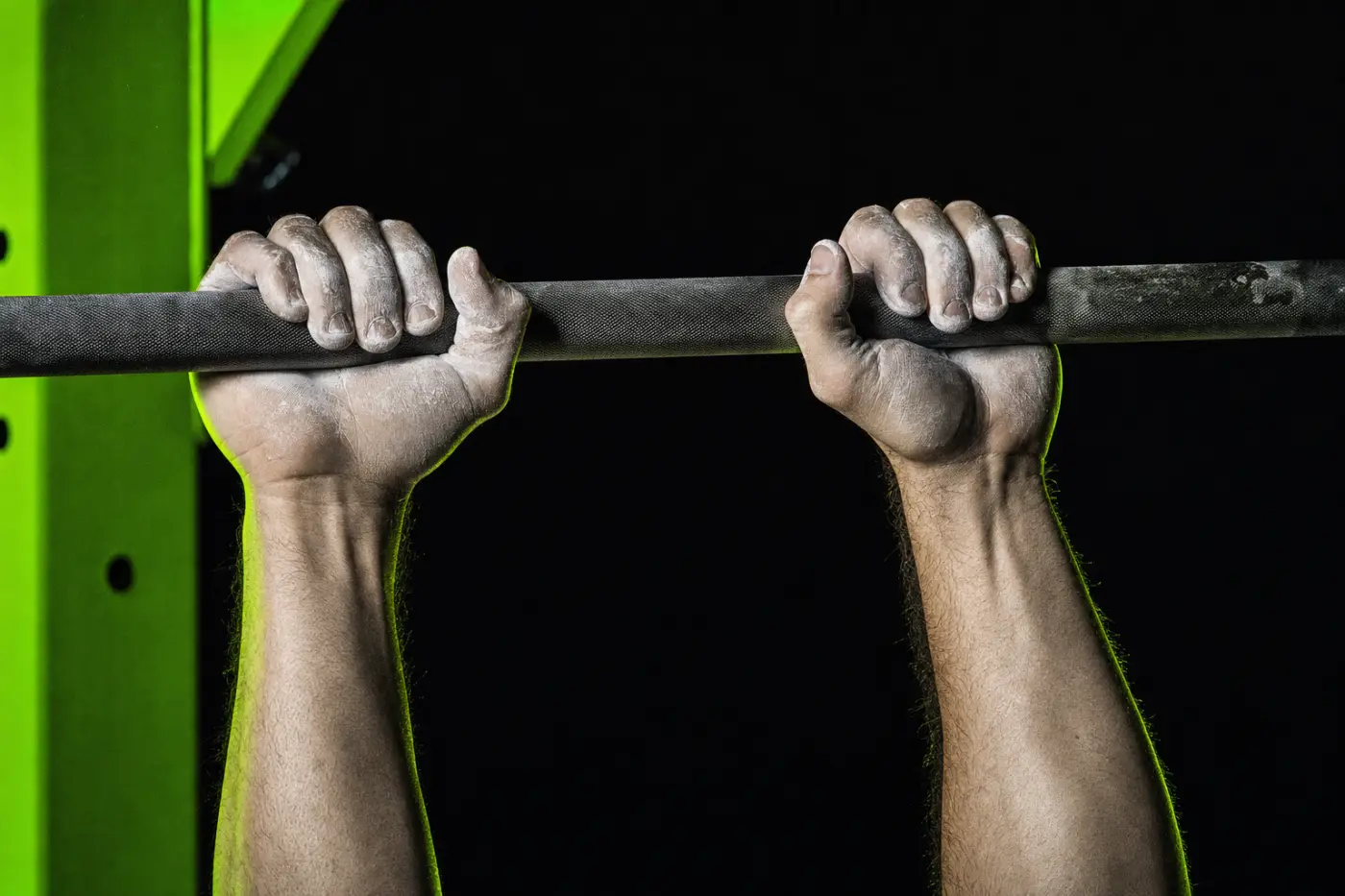
- Negatives are the highest-value exercise for anyone at zero reps.
- Band-assisted pull-ups help least at the hardest part of the movement.
- Train pull-ups frequently — three times a week, well short of failure.
- Volume at low reps beats occasional maximal attempts.
- If you are stuck around five or six, add weight rather than chasing more reps.
The pull-up is unusual among strength exercises in that a large number of otherwise fit adults cannot do a single one — and the standard advice they receive, which is to use the assisted machine or a band, is close to the least effective option available.
Here is a progression that works, staged by where you actually are.
Why it is hard
You are lifting your entire bodyweight with a relatively small amount of muscle, through a range where the mechanics change substantially.
Three things limit people:
- Relative strength. Bodyweight is the load. Being heavier makes it genuinely harder, and this is not a character flaw
- The top range. As you approach the bar, the leverage worsens and the lats shorten. This is where reps fail
- Grip and scapular control. Both are trainable and both are commonly the actual limiter rather than the lats
Stage 1: zero reps
The goal is one clean rep. Expect eight to twelve weeks.
The primary exercise: negatives.
Jump or step to the top position, chin over the bar, then lower yourself as slowly as you can control. Aim for 5 seconds initially, working toward 10.
- 3–5 singles per session
- Full rest between them — 2 minutes or more
- 3 sessions a week
Negatives work because you are considerably stronger eccentrically than concentrically. You can control a load you cannot yet lift, and that controlled exposure builds exactly the strength you are missing.
Supporting work:
- Dead hangs. 3 sets, accumulate 60 to 90 seconds total. Grip is often the hidden limiter, and this is the same quality discussed in grip strength
- Heavy rows. Barbell or dumbbell, 3 × 6–8. Builds the pulling musculature under real load
- Scapular pull-ups. Hang from the bar and pull your shoulder blades down without bending the arms. 3 × 8. Teaches the initiation most beginners cannot do
- Inverted rows. Under a bar at an angle, feet on the floor. 3 × 8–12
On bands: they are not useless, but they assist most at the bottom, where the band is stretched furthest, and least at the top, where you are weakest. That is precisely backwards. If you use them, use them alongside negatives rather than instead.
On the assisted pull-up machine: the same problem, plus it removes the stabilisation demand entirely. Convenient, low transfer.
Stage 2: one to five reps
The goal is to accumulate volume. This is where most progress is made and where most people stall by training it wrong.
The principle: frequency and submaximal sets.
If your max is 3, do sets of 1 to 2, many times. Not sets of 3 to failure.
A workable session:
- 6–8 sets of 1–2 reps
- 90 seconds rest between sets
- 3 times a week
This accumulates 10 to 16 quality reps per session, against maybe 6 grinding reps if you trained to failure. The pull-up responds extremely well to frequency, because it is a skill as much as a strength exercise, and every rep is practice.
Keep the supporting work. Rows and dead hangs continue throughout.
On chin-ups: the supinated grip is easier for most people and a legitimate stepping stone. Train both — they are related but not identical.
Stage 3: five to ten reps
Here the strategy changes, and this is the stage people misunderstand most.
Stop chasing more bodyweight reps. Add weight.
If you are stuck around five or six, the problem is that bodyweight is a high percentage of your maximum strength. Grinding out more reps at that percentage is slow. Raising your maximum makes bodyweight a lower percentage of it, and the reps arrive as a side effect.
The session:
- Weighted: 4 sets of 3–5 with a belt or a dumbbell between the feet. Start with 5 kg
- Bodyweight: 2–3 sets short of failure, at the end
- 2 to 3 times a week
Most people who plateau at five and switch to weighted sets of five find themselves doing ten unweighted within a couple of months. This is a straightforward application of progressive overload to an exercise people usually refuse to load.
Technique
Worth fixing early, because bad reps build bad patterns.
- Start from a dead hang, arms straight. A half rep is not a rep
- Initiate by pulling the shoulder blades down, before the arms bend
- Chin clearly over the bar
- Control the descent. Dropping wastes the most valuable half of the rep
- Keep the ribs down and avoid arching into a swing
Kipping is a legitimate skill in its own sport and a different exercise. If you want strict pull-ups, train strict pull-ups.
Grip width: slightly wider than shoulders is a reasonable default. Very wide grips reduce range and stress the shoulders for no clear benefit.
Programming it for a hybrid athlete
Pull-ups recover quickly and cost almost nothing systemically, which makes them one of the few things you can genuinely train three times a week alongside running and heavy lower-body work.
- Place them anywhere. They will not compromise a run
- Do them before your accessories, after your main lift
- Three sessions a week through a progression phase, two to maintain
- Do not train them to failure repeatedly. It slows progress and wrecks your grip for anything else that day
The realistic timeline
From a standing start, training three times a week and eating adequately:
- First rep: 8 to 12 weeks
- Five reps: 4 to 6 months
- Ten reps: 8 to 14 months
Bodyweight matters, and being honest about it helps. Someone carrying extra weight is lifting more, and losing a few kilograms improves pull-ups faster than any programme — which is not a reason to diet, but it is a reason not to compare your numbers to a lighter person's.
What actually gets people there
Not a clever protocol. Three things:
Frequency. Three times a week beats once, comprehensively.
Submaximal volume. Many quality reps beat few grinding ones.
Patience with negatives. The least appealing exercise on the list and the one that does most of the work at stage one.
None of that is complicated. It is just slower than people expect, and the most common reason someone still cannot do a pull-up is that they trained it hard for three weeks, saw nothing, and stopped — which is the pattern described in the two-week rule, applied to a single exercise.
Questions people ask
How do you get your first pull-up?
Negatives are the fastest route: jump or step to the top position and lower yourself as slowly as you can, aiming for 5 seconds and building toward 10. Three to five singles, three times a week, alongside heavy rows and dead hangs. Most people who train this consistently get their first rep within eight to twelve weeks.
Do resistance bands help pull-ups?
Somewhat, but less than they appear to. A band provides most of its assistance at the bottom, where it is stretched furthest, and least at the top, where you are weakest — so it makes the easy part easier and leaves the sticking point untrained. Negatives and partial reps address the hard range directly and transfer better.
How often should you train pull-ups?
Three times a week, kept well short of failure. The pull-up is a skill as much as a strength exercise, and frequency drives skill acquisition. Doing one maximal-effort session a week produces far slower progress than three submaximal sessions accumulating more total quality reps.
Why am I stuck at 5 pull-ups?
Usually because you keep training in the same rep range at bodyweight. The fix is to add load — do sets of three to five with a weight belt or dumbbell between your feet — which raises your maximal strength so that bodyweight becomes a lower percentage of it. Weighted sets of five typically unlock unweighted sets of ten faster than grinding out more bodyweight reps.
Are chin-ups easier than pull-ups?
For most people yes, because the supinated grip recruits the biceps more effectively and puts the shoulder in a slightly stronger position. That makes chin-ups a useful stepping stone, but they are not identical — train both, and do not assume chin-up numbers will transfer rep for rep.
Keep reading
Grip Strength: The Silent Limiter in Every Hybrid Race
Your farmers carry does not end because your legs quit. Grip is the most trainable and most neglected quality in hybrid sport — and it correlates with a surprising amount beyond the gym.
Bulgarian Split Squats: Why They Hurt So Much and Why You Should Do Them
The most hated accessory in strength training is also one of the highest-return exercises for anyone who runs. What makes them disproportionately brutal, how to set up so you train the right thing, and how to program them without wrecking your week.

Progressive Overload When You Can Only Train 3 Days a Week
Adding weight to the bar every week stops working within months. Six other ways to progress, ranked by how long each keeps delivering, built specifically for people whose training frequency is fixed and low.