The Deadlift for Endurance Athletes: How Heavy, How Often
The most useful lift for a runner and the one most likely to wreck a training week if programmed badly. Loading, frequency, which variation to pick, and where to put it so it does not eat your long run.
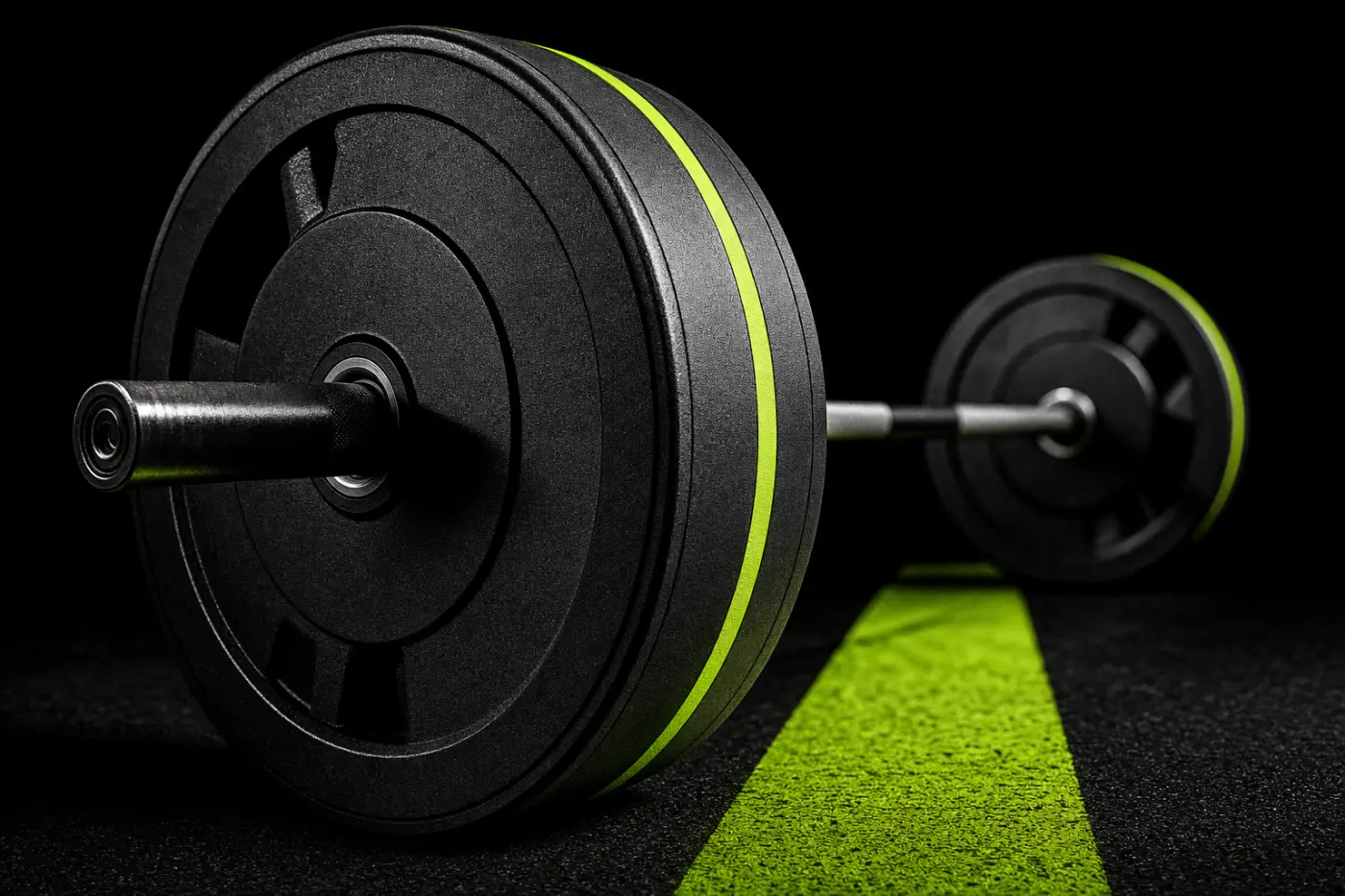
- Heavy and low volume: 3 to 5 reps, 2 to 3 sets. Not 4 sets of 12.
- Once a week is enough for most endurance athletes in a build phase.
- The trap bar is the better default for runners — less lower-back fatigue, easier to learn.
- Never the day before a long run or a quality session.
- Romanian deadlifts train the hamstrings; conventional deadlifts train the pull. They are not interchangeable.
Ask a runner which lift matters most and you will usually get "squats". Ask a coach and you will more often get the hinge — because running is a hip extension sport, and the deadlift is the most direct way to load hip extension heavily.
It is also the lift most capable of ruining a week of running if you program it like a powerlifter.
Why it earns its place
It loads the posterior chain under real weight. Glutes and hamstrings drive propulsion and absorb landing forces. They are also the muscles most likely to be underdeveloped in a runner who has done nothing but run.
It improves running economy. Heavy strength work makes a given pace cost less oxygen — stiffer tendons return more elastic energy and stronger muscles operate at a lower percentage of maximum with each stride. This is close to the only free speed in distance running.
It builds tissue tolerance. Most running injuries are load-tolerance failures. Stronger tissue fails later.
It is time-efficient. Two or three working sets covers it. You are in and out in twenty minutes.
The loading rule
This is the whole article in three lines.
Heavy. Low reps. Low volume.
3 to 5 reps, 2 to 3 working sets, at roughly 80 to 87% of your one-rep max.
The instinct runs the other way — endurance athletes assume higher reps "match" their sport. It is precisely backwards. High-rep deadlifting produces large amounts of metabolic and muscular fatigue that competes directly with your running, while delivering relatively little of the neural adaptation that improves economy.
| Light and long | Heavy and brief | |
|---|---|---|
| Reps | 8–15 | 3–5 |
| Sets | 4–5 | 2–3 |
| Fatigue cost | High | Low |
| Economy benefit | Small | Large |
| Interference with running | High | Low |
You should leave the gym feeling like you did not do much. That is the correct sensation and it takes some getting used to.
Which variation
Trap bar (hex bar) — the default for most endurance athletes.
The handles sit at your sides, so the load runs through your body rather than in front of it. That means less shear on the lower back, less hip-flexor and erector fatigue, a shorter learning curve, and a much lower chance of a bad rep. For someone whose priority is running, it delivers most of the benefit at a fraction of the recovery cost.
Conventional — if you want to train the lift itself.
More posterior chain, more lower-back demand, more technical. Excellent if you enjoy it and want the barbell number to go up. Higher recovery cost, so respect its placement in the week.
Romanian deadlift — a different exercise, not a substitute.
The RDL is a hamstring-under-stretch movement, done from the top down, with the knees soft and the range limited by hamstring tension. It is superb, and most runners should do it, but it trains a different quality from a heavy pull off the floor. Do not treat one as a replacement for the other.
Single-leg RDL — for asymmetry and hip stability.
Light, controlled, high value. Pairs well with Bulgarian split squats as the unilateral half of a runner's programme.
Where it goes in the week
This is where most damage happens, and the rules are strict because the long run is the session you are protecting.
Never the day before a long run. Not negotiable. Heavy hinging leaves the hamstrings and glutes exactly as fatigued as your long run needs them fresh.
Never the day before a quality session either, once you are in a build.
Best placement: on an easy running day, or after a hard run earlier the same day. Hard days hard, easy days easy — you are consolidating stress rather than spreading it.
A typical arrangement for a runner with a Saturday long run:
- Mon — Deadlift, heavy, low volume
- Tue — Quality run
- Wed — Easy
- Thu — Upper body, or easy run
- Fri — Easy or rest
- Sat — Long run
- Sun — Easy or rest
The general scheduling logic is in how to structure a hybrid training week.
How often
Once a week during a running build. This genuinely maintains and often slowly builds strength, and it is what fits alongside meaningful mileage.
Twice a week in an off-season or strength block, when running volume is lower and the deadlift is a priority rather than a support lift.
Once every two weeks during a race taper, kept light, purely to hold the pattern.
More than twice a week is a powerlifting decision, not an endurance one.
Progression
Double progression, exactly as described in progressive overload on three training days a week:
- Work in a 3–5 rep range
- Add a rep per session at the same load until you hit 5 across all sets
- Add weight, drop back to 3
- Repeat
Use small jumps — 2.5 kg is plenty. On a lift this heavy, chasing 5 or 10 kg increments is the fastest route to a stall.
Expect progress to be slow while running volume is high. That is not a failure. Holding your deadlift through a marathon block is a good outcome, and the reasoning is the same as in training for a marathon without losing your squat.
The mistakes
Going to failure. Never on this lift. Technique degrades before the muscles do, and a failed deadlift rep is where backs get hurt. Leave one or two reps in reserve, always.
Testing a one-rep max mid-block. Tempting, expensive, and it will cost you a week of running.
High-rep sets for "endurance". Covered above, and it remains the most common error.
Doing it the day before the long run. Also covered above, and it remains the most damaging one.
Skipping it entirely because it feels like "not running". The most common of all. Twenty minutes a week is a small price for tissue that fails later and a stride that holds together at kilometre thirty-five.
The summary
Two or three heavy sets of three to five, once a week, on a day that is not before your long run or your quality session. Use a trap bar unless you specifically want the barbell lift. Progress slowly, never go to failure, and leave feeling underworked.
That is roughly twenty minutes a week, and it is the highest-return twenty minutes an endurance athlete can spend outside of running itself.
Questions people ask
Should runners deadlift?
Yes. The hinge is the pattern that loads the glutes and hamstrings — the muscles that drive propulsion and absorb landing forces — and heavy low-volume work improves running economy and tissue tolerance without adding meaningful bulk. It is among the highest-return strength exercises available to an endurance athlete.
How heavy should a runner deadlift?
Heavy enough that 3 to 5 reps is genuinely challenging, which usually means somewhere around 80 to 87% of your one-rep max. Light high-rep deadlifting is the worst option available — it generates substantial fatigue that competes with your running while producing little of the neural and tendon adaptation you actually want.
How often should endurance athletes deadlift?
Once a week is enough during a running build, twice in an off-season or strength-focused block. The lift is systemically demanding, and a second heavy session usually costs more in recovery than it returns while your running volume is high.
Is the trap bar better for runners?
For most, yes. The trap bar puts the load in line with your body rather than in front of it, which reduces lower-back and hip-flexor fatigue, makes the movement considerably easier to learn safely, and lets you train the pattern hard without the recovery cost of a heavy conventional pull.
Will deadlifting make me slower?
No — heavy, low-volume lifting improves running economy, meaning a given pace costs you less oxygen. It only makes you slower if it is programmed badly: too much volume, placed the day before your key sessions, or taken to failure. Two to three heavy sets, once a week, on the right day, costs your running nothing.
Keep reading
Bulgarian Split Squats: Why They Hurt So Much and Why You Should Do Them
The most hated accessory in strength training is also one of the highest-return exercises for anyone who runs. What makes them disproportionately brutal, how to set up so you train the right thing, and how to program them without wrecking your week.

Grip Strength: The Silent Limiter in Every Hybrid Race
Your farmers carry does not end because your legs quit. Grip is the most trainable and most neglected quality in hybrid sport — and it correlates with a surprising amount beyond the gym.

Progressive Overload When You Can Only Train 3 Days a Week
Adding weight to the bar every week stops working within months. Six other ways to progress, ranked by how long each keeps delivering, built specifically for people whose training frequency is fixed and low.