Tendons Adapt Slower Than Muscle, and That's Why You Got Injured
Muscle responds to training in weeks; tendon and bone take months. The mismatch explains most overuse injuries, and it explains why the fittest-feeling block is often the one that breaks you. How to load tendons deliberately.
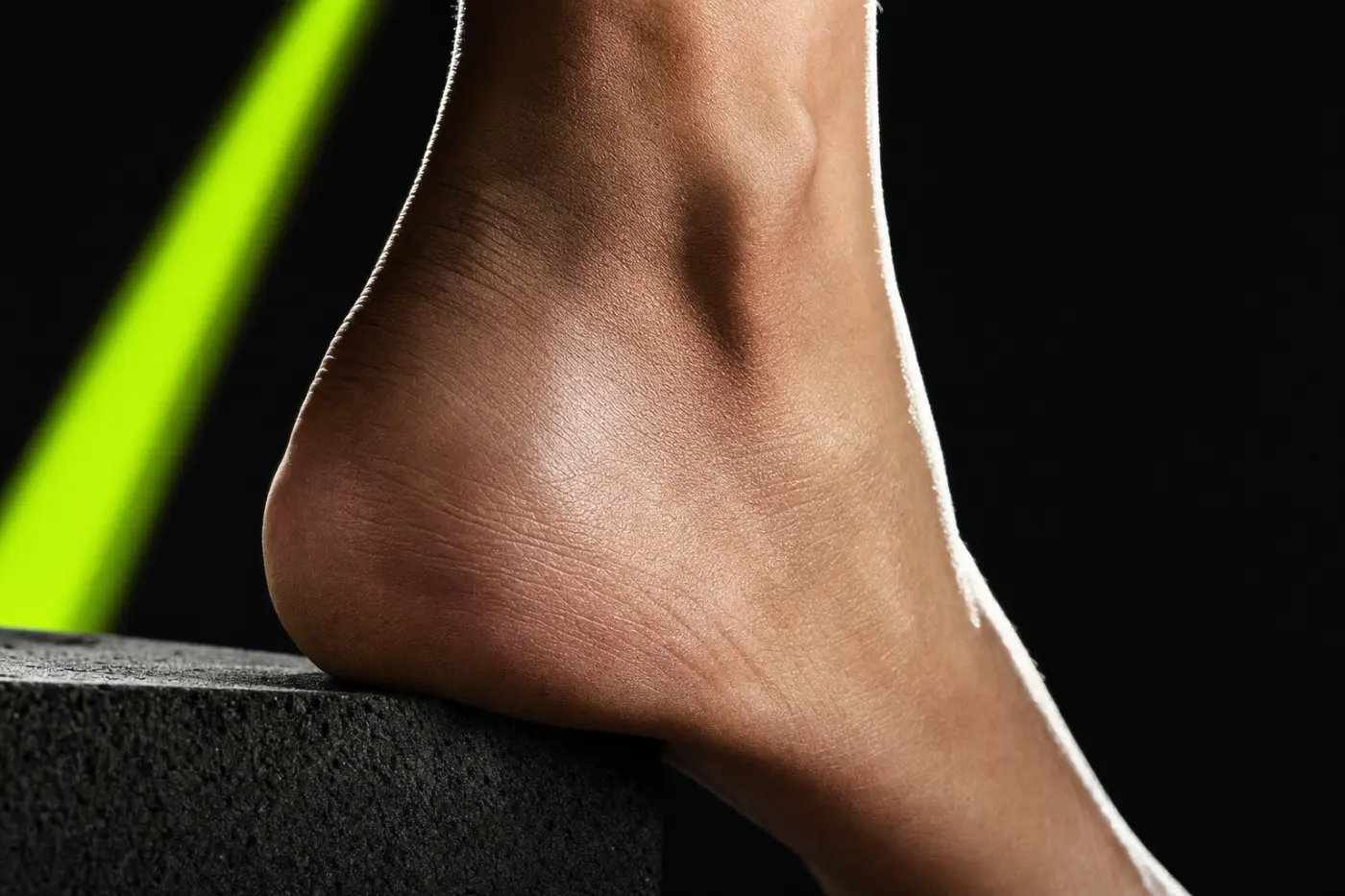
- Muscle adapts in weeks. Tendon and bone take months.
- That gap is why injuries land in the block where you felt strongest.
- Tendons respond to heavy, slow load — not to stretching or rest.
- Rest reduces pain and also reduces tendon capacity. It is not a treatment.
- Progress load in small increments and give tendons time they will not ask for.
There is a specific and very common injury story that goes like this.
Eight weeks into a block, everything is working. Paces that felt hard are comfortable. The lifts are moving. You feel, genuinely, like a different athlete. So you add a session, extend the long run, put more on the bar.
Two weeks later your Achilles hurts.
This is not bad luck, and it is not a mystery. It is the entirely predictable result of two tissues adapting on different clocks.
The timelines
Muscle adapts fast. Noticeable strength gains within weeks, largely neural at first. Measurable change in muscle size within six to eight weeks. Mitochondrial and aerobic adaptations arrive on a similar timescale.
Tendon adapts slowly. Collagen turnover is slow, the blood supply is far more limited, and meaningful changes in tendon stiffness and cross-sectional area take months of consistent loading.
Bone is slower still. Bone remodelling operates over months, and it has an unpleasant intermediate stage where it is actively remodelling and temporarily weaker than it was before.
The gap is the problem. Your muscles and heart become capable of doing considerably more work considerably sooner than your tendons and bones become capable of absorbing it. And nothing tells you where the tendon is — there is no sensation of connective tissue readiness. All you can feel is the muscular fitness, which is running ahead.
Why this explains so much
Once you see the mismatch, a lot of otherwise confusing patterns resolve.
Why injuries land in the best block. You get injured when you feel strongest, because feeling strong is what permits the load that exceeds tissue capacity.
Why beginners get hurt at low volumes. Twenty kilometres a week is a small number and an enormous change from zero. The change is what matters, not the absolute.
Why comebacks go wrong at week five. Fitness returns faster than tissue tolerance, so week five is when your capability and your tissue are most out of step — the practical management of that is in coming back after a long layoff.
Why a new surface, a new shoe or a new session type causes problems. Tendons are adapted to a specific pattern of loading. Change the pattern and the adaptation is partly irrelevant, even at the same volume.
Why it gets worse with age. Tendon adaptation slows further, and the gap widens — see hybrid training in your 40s and 50s.
What tendons actually respond to
The useful part, because tendons are trainable — just on their own terms.
Heavy, slow load. Tendons adapt to mechanical tension. The best-supported approach is heavy slow resistance: high load, deliberate tempo, full range, moderate reps.
The practical shape is 3 to 4 sets of 6 to 8 reps, with something like three seconds down and three seconds up, at a genuinely heavy load, two or three times a week.
Isometrics. Sustained holds under load — 30 to 45 seconds, several sets. Particularly useful with an irritated tendon, because they often reduce pain acutely while still providing load.
Not stretching. Stretching a tendon does not provide the tension stimulus that drives adaptation, and stretching a compressed and irritated tendon frequently makes it worse. This is one of the more entrenched pieces of wrong advice in running.
Not rest. Which deserves its own section.
The rest trap
The instinct with a sore tendon is to stop until it stops hurting.
Rest reduces pain and reduces capacity. The tendon detrains. When you return at the previous load, the tendon is now less able to handle it than it was when it first complained — so the pain comes back, often worse, and you conclude you rested insufficiently.
The current consensus in tendinopathy management is progressive loading: keep loading the tendon at a level it tolerates, and build from there. Tolerable is generally understood as low-level pain during the activity that settles within 24 hours and does not worsen session to session.
This is a case for seeing a physiotherapist rather than self-managing from an article, because getting the entry load right matters and it varies enormously. But the principle — load it, do not hide from it — is the part most people have backwards.
Loading tendons deliberately
The specific exercises worth having in a hybrid programme, chosen for the tendons that actually fail in runners.
Achilles and calf
- Heavy slow calf raises, straight-leg and bent-knee, loaded, with a three-second tempo. The single highest-value item on this list for a runner
- Isometric calf holds, 5 × 45 seconds
- Eccentric heel drops, the classic protocol, still useful
Patellar tendon
- Spanish squats, with a band behind the knees
- Slow tempo squats and split squats — see Bulgarian split squats
- Isometric wall sits or held split squats
Hamstring and gluteal tendons
- Romanian deadlifts, slow and heavy
- Nordic curls, progressed carefully
- Single-leg RDLs
Plantar fascia and foot
- Loaded calf raises with the toes elevated
- Foot intrinsic work, unglamorous and effective
None of this is separate from a strength programme. It is a strength programme run with heavier loads and slower tempos than most runners use — the base being the only six lifts a runner needs, with the tempo adjusted.
Managing the mismatch in practice
Progress load smoothly. The ten percent guideline is imprecise and directionally correct. What actually causes problems is the jump — a 30 km week followed by a 45 km week, or a new hill session added to an unchanged programme.
Change one variable at a time. Volume or intensity or surface or shoes. Not three at once, which is what a new training block usually is.
Treat every new stimulus as new, regardless of your fitness. Starting hill sprints as a well-trained runner still means starting hill sprints as a beginner in Achilles terms.
Build tendon capacity in advance. Heavy slow work during base phase, months before the intensity arrives, is how you close the gap before it becomes a problem. This is the argument for Lydiard's hill resistance phase sitting before the track work — Lydiard and the 100-mile week sequences it that way for reasons that turn out to be sound.
Do not chase the fitness you feel. This is the behavioural core of it. When a block is going well and you feel capable of more, that is exactly the moment the gap is widest.
The reframe
Most overuse injuries are not caused by doing too much. They are caused by doing too much too soon relative to a tissue that adapts on a slower clock than the one you are listening to.
Your cardiovascular fitness is an unreliable narrator about what your Achilles can handle. It will tell you, honestly and enthusiastically, that you are ready — and it has no information about the tissue that will actually fail.
Load tendons deliberately, heavily and slowly. Progress in small increments. And when a block is going brilliantly and you want to add more, that is the signal to hold, not to push.
Questions people ask
How long do tendons take to adapt to training?
Months rather than weeks. Tendon collagen turnover is slow and blood supply is limited compared with muscle, so meaningful changes in tendon stiffness and capacity typically take somewhere in the range of two to six months of consistent loading — against roughly six to eight weeks for noticeable muscular adaptation.
Why do I get injured when I feel fittest?
Because your muscular and cardiovascular fitness has outrun your connective tissue. Feeling strong lets you run faster and further, which loads tendons and bone more than they have yet adapted to handle. The sensation of being in great shape is precisely the condition under which the mismatch becomes dangerous.
How do you strengthen tendons?
With heavy, slow resistance work — controlled loading through range at high load and low speed, such as slow calf raises, tempo squats and Spanish squats. Isometric holds also help, particularly for reducing pain in an irritated tendon. Tendons respond to mechanical tension, which stretching does not provide.
Does rest heal tendinopathy?
It usually reduces pain and does not fix the problem. Rest lowers tendon capacity further, so pain returns when you resume at the same load. The consensus approach is progressive loading — continuing to load the tendon at a level it tolerates and building from there — rather than avoiding load until it feels better.
How fast should you increase training load?
Slowly and smoothly, with roughly ten percent per week as a rough guide and the absence of sudden jumps mattering more than the exact figure. Tendon and bone problems are usually caused by a rapid change in load rather than by a high absolute load, which is why they cluster after a new plan, a new surface or a return from a break.
Keep reading
Foam Rollers, Massage Guns and What They Actually Do
They do not break up scar tissue, lengthen fascia, or flush lactic acid. What the evidence suggests is happening instead, why the effects are real but short-lived, and where these tools genuinely belong in a week.

Mobility vs. Flexibility, and Which One You Actually Need
They are not the same thing, and most people chasing one need the other. What the distinction means practically, why strength through range beats passive stretching for athletes, and how little of it you actually require.

Naps, Sleep Banking and the Athlete's Sleep Debt
You cannot fully repay sleep debt at the weekend, but you can do more than people assume. Nap lengths and timing, whether banking sleep before a hard block helps, and the order to fix things when your nights are genuinely short.