Wall Balls: The Station That Decides Your Last Ten Minutes
The final station, the one most likely to fall apart, and the one where a rehearsed set structure is worth minutes. Technique that saves your shoulders, how to break the reps, and what to do when the reps start getting no-repped.
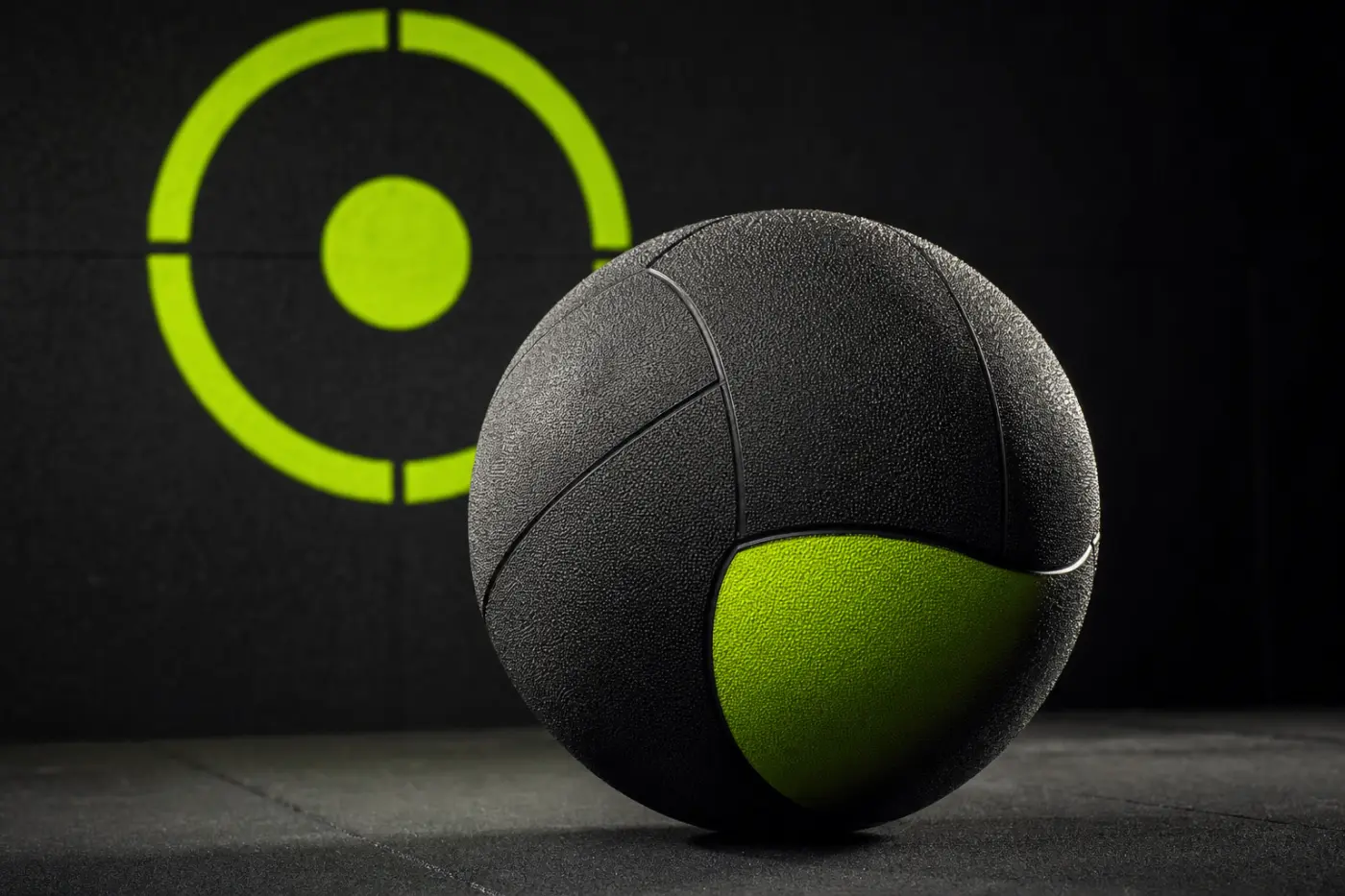
- Plan your set breakdown before the race. Improvising at rep 60 does not work.
- Most no-reps are depth, and depth is what fails first under fatigue.
- Use your legs. Wall balls become an arm exercise only when you stop squatting properly.
- Practise them tired, because you will never do them fresh in a race.
- Small, consistent sets with short breaks beat large sets followed by long ones.
Every HYROX race has a station where people lose more time than they expected, and it is nearly always the last one.
By the time you reach the wall balls you have run eight kilometres, completed seven stations, and just finished the sandbag lunges, which have specifically destroyed the exact muscles wall balls require. Then you are asked for a hundred repetitions of a full-depth squat and throw.
This is the station that decides your finish time, and it is the one most people train least.
Why it falls apart
Three reasons, and they compound.
1. It comes last, after the lunges. The station immediately before it is quadriceps-specific work under load. Wall balls are quadriceps-specific work under load. You arrive with nothing left in exactly the tissue you need.
2. Depth fails before strength does. You will almost certainly be physically capable of a hundred squats. What degrades is the depth of them, which is what the standard judges — and the athlete rarely notices the loss of range, because everything feels equally terrible.
3. Improvised pacing collapses. Someone who goes unbroken for 35 and then stands with their hands on their knees will finish behind someone doing steady tens, every time. This is the single largest available time saving at the station.
The technique that matters
Use your legs. This is the whole thing.
The ball should be launched by leg drive and hip extension, with the arms guiding it rather than pressing it. Arms are far weaker than legs and fatigue far faster, and the moment you start pressing the ball you are on a countdown to failure.
The cues that hold up:
- Elbows in, ball close to the chest at the bottom. Elbows flaring out means the arms have taken over
- Catch high — receive the ball around chest height and let its momentum carry you into the next squat rather than stopping to reset
- Release at full extension. Time it so the ball leaves your hands at the top of the drive
- Look at your target, not at the ball. Aim is cheap accuracy; chasing the ball with your eyes is not
- Stand close enough that you are throwing upward rather than forward. Too far back is a common and expensive error
Breathing: exhale on the throw, inhale on the descent. Under fatigue people hold their breath and it accelerates the collapse noticeably.
Depth, specifically
The standard requires the hip crease to pass below the top of the knee at the bottom of each repetition. That is the rule that generates most no-reps.
Two things to do about it:
Film yourself doing 30 reps at the end of a hard session. Not fresh — fresh reps tell you nothing. Almost everyone discovers their rep 25 is several inches shallower than their rep 5, and almost nobody can feel it happening.
Train slightly deeper than the standard. If your habitual depth in practice is just at the line, your fatigued race depth will be above it. Build in the margin.
If depth is limited by ankle mobility rather than fatigue, that is a separate and fixable problem — mobility vs flexibility covers what actually changes it.
How to break the reps
Decide before the race. Write it on your hand if necessary.
Three structures that work:
Even sets. 10 × 10, with a fixed 10-second break. Simple, predictable, easy to hold when your brain has stopped working. The default recommendation.
Descending sets. 20-15-15-10-10-10-10-10. Uses the fact that you are freshest at the start, which you are, marginally.
Small sets throughout. 20 × 5, with very short breaks. Looks absurd and is remarkably effective for athletes who struggle to keep depth, because no set is ever long enough to degrade.
What does not work: going unbroken until failure. The recovery cost of a genuine failure set is far greater than the time saved by the big set. Two minutes of standing recovery erases everything you gained.
The rest discipline is the hard part. Ten seconds means ten seconds, counted. Left to feel, ten seconds becomes thirty at rep 60, and thirty-second breaks across ten sets is three and a half minutes gone.
Training it
Do them tired. Repeatedly. The most useful single session is a 1 km run, then 30 sandbag lunges, then your planned wall ball structure. That rehearses the actual race condition, and it is where you find out whether your plan survives contact.
Build the underlying capacity separately:
- Front squats. The specific strength that holds depth under fatigue
- Thrusters. Closest strength-training analogue
- Unbroken sets of 20 to 30, once a week, for the capacity and the confidence
- General leg strength, because a hundred squats with a light ball is a strength-endurance problem sitting on top of a strength problem. The implement discussion is in trap bar vs barbell vs dumbbells
Practise at the correct ball weight and target height for your division. Training at a lower target and racing at a higher one is an unpleasant surprise to have at rep 40.
When it goes wrong on race day
If you start getting no-repped: stop and reset for five seconds. Do not attempt to fix depth mid-flow while gasping — you will fail again and lose more. Five seconds, three deliberate deep reps, then resume with smaller sets.
If your shoulders are failing rather than your legs: you have been pressing the ball. Consciously drive harder with the legs and release earlier. This is recoverable within a few reps if you catch it.
If you cannot hold your planned sets: halve them immediately rather than pushing through and blowing up. Sets of five with short breaks will still get you to a hundred at a respectable rate.
If you are simply gone: keep moving. Singles, if necessary, with a rhythm. The finish line is on the other side of the hundred and there is no alternative route to it.
Where this fits in the race
Wall balls are the station where a good race is confirmed or lost, but the loss usually originates earlier. Arriving at the wall with nothing left is generally a pacing failure on the runs or an over-hard effort on the sled and lunges — the wall balls just present the bill.
The season-level view is in planning a HYROX season, and the earlier stations that most often cause the damage are covered in sled push and pull.
The summary
Plan your sets before you start. Use your legs and keep your elbows in. Train deeper than the standard, because depth is what fails. Practise the whole thing tired, because that is the only version you will ever race.
A hundred wall balls at the end of a HYROX is not primarily a fitness test. It is a test of whether you rehearsed what to do when everything hurts — and the athletes who did are the ones still moving at rep 80.
Questions people ask
How many wall balls are in a HYROX race?
One hundred, as the eighth and final station, immediately after the sandbag lunges and the last one-kilometre run. Ball weight and target height differ by division, so confirm the current standards for the division you have entered before you build your training around a number.
Why do I get no-repped on wall balls?
Almost always depth, occasionally the target. The standard requires the hip crease to pass below the top of the knee at the bottom of each rep, and depth is the first thing to disappear when the legs are cooked. Filming yourself at the end of a hard set is the fastest way to find out what your fatigued reps actually look like.
How should you break up 100 wall balls?
Into planned, consistent sets with short fixed rests rather than going as far as possible and then improvising. Ten sets of ten with ten-second breaks, or a descending structure such as 20-15-15-10-10-10-10-10, both work well. The specific numbers matter less than deciding them in advance and holding to them.
How do you make wall balls easier?
Drive with your legs and let the ball leave your hands at the top of the extension rather than pressing it. Catch it high and absorb it into the next squat instead of stopping between reps. Keep your elbows in and the ball close to your chest at the bottom. Efficiency here is worth more than fitness.
How do you train for HYROX wall balls?
Do them under fatigue, since you will never meet them fresh in a race. Rehearse your exact race set structure after a run, and separately build the underlying capacity with front squats, thrusters and unbroken sets of 20 to 30. Training only fresh sets teaches you nothing about what happens at rep 70.
Keep reading
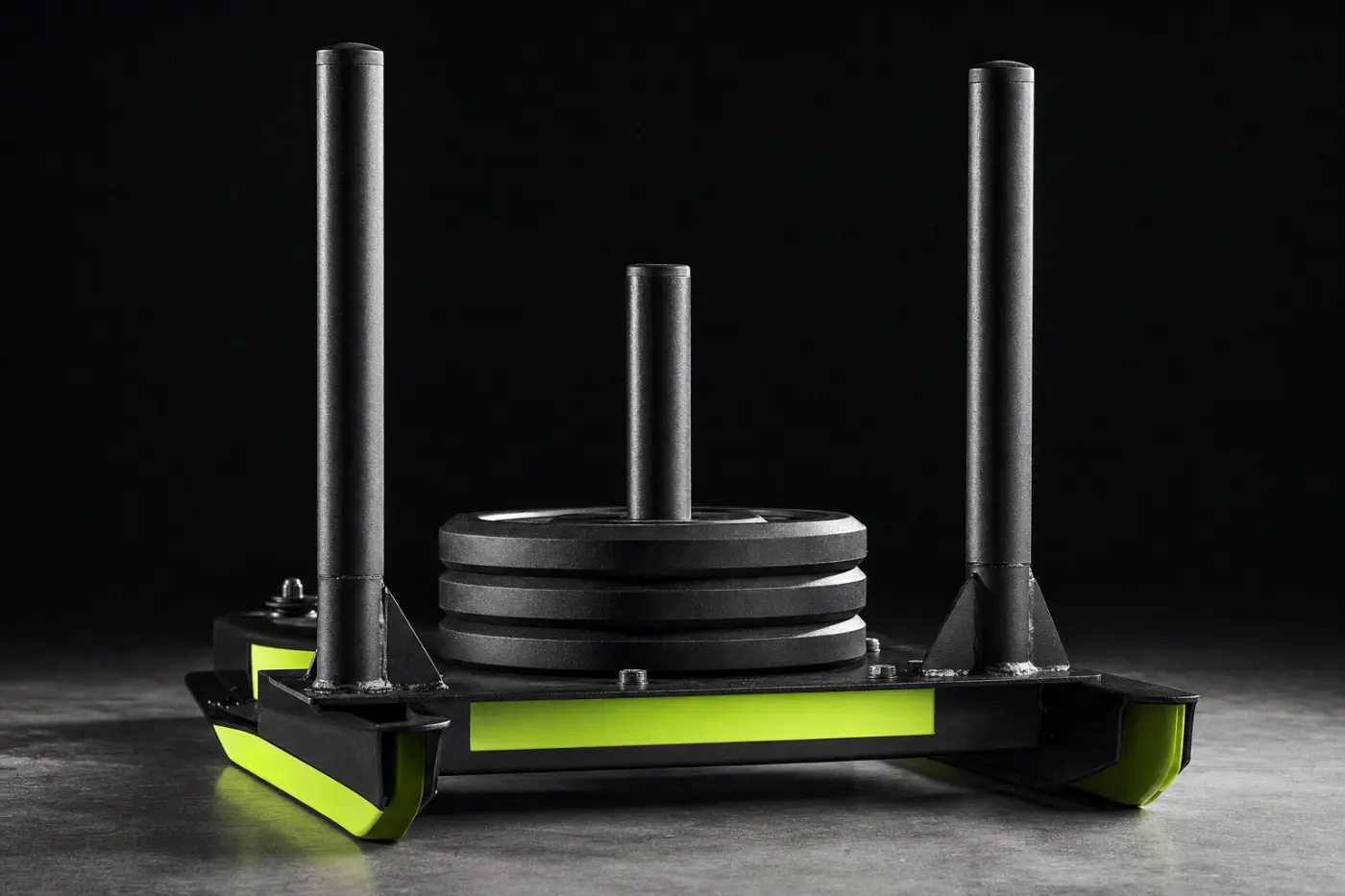
Sled Push and Pull: Technique That Saves Minutes, Not Seconds
The two stations with the widest spread of times between athletes of similar fitness, because both are heavily technical. Body position, step length, rope mechanics, and why floor friction varies so much between venues.
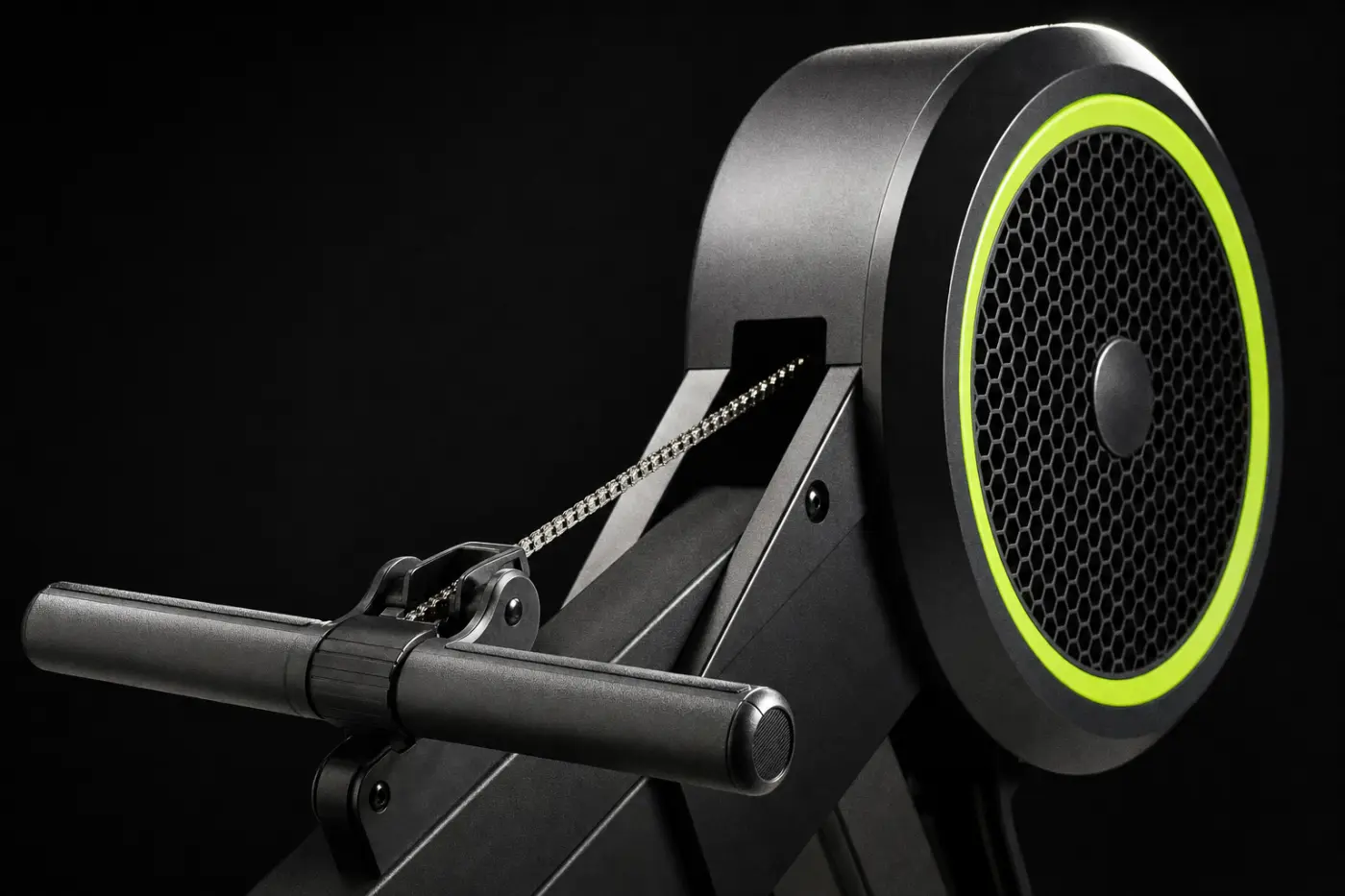
The SkiErg and Rower: A Technique Guide for People Who Lift
Strong athletes are routinely slow on both machines because they muscle them. The sequencing that makes each efficient, damper and drag factor settings that actually matter, and the pacing that keeps your legs for the next run.

HYROX for Women: What Differs and What Doesn't
Different loads and rep counts, a different balance of limiting factors, and a lot of training advice written for someone else. Where the demands genuinely differ, where they do not, and what that means for how you train.