Trap Bar vs. Barbell vs. Dumbbells: What to Load and When
Three implements, three different loading profiles and stability demands. Which one suits a hybrid athlete's hinge, squat and press, and why the trap bar is often the right default for someone who also runs.
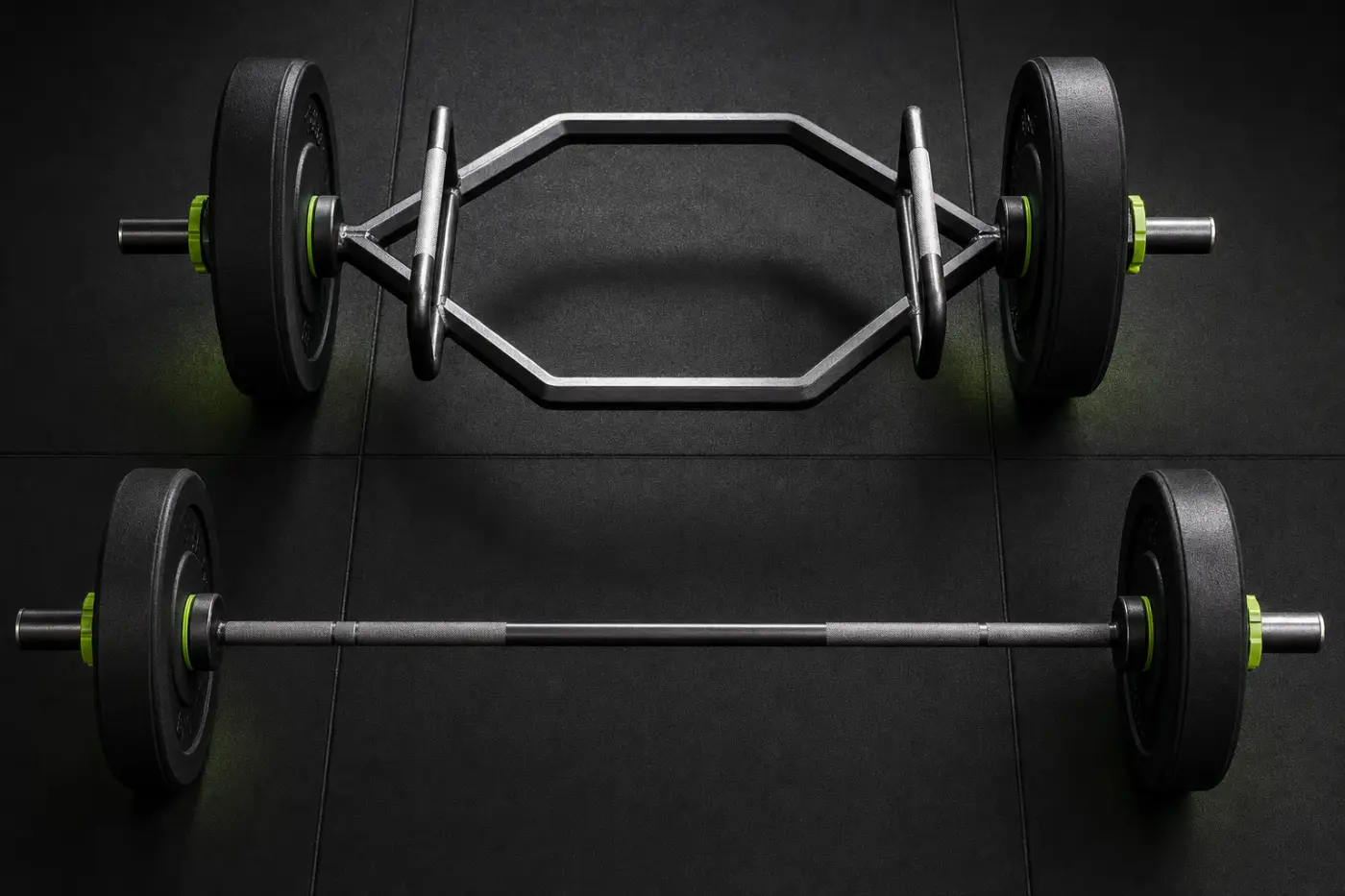
- The trap bar is the best default hinge for most people who also run.
- The straight barbell allows the heaviest loads and demands the most technique.
- Dumbbells expose and fix side-to-side differences the barbell hides.
- Choose by what limits you — technique, load, symmetry or recovery cost.
- There is no implement you must use. There is a wrong implement for your current limiter.
The implement debate usually gets argued as though one of them is correct. It is a more useful question than that, because the three tools differ in ways that map cleanly onto what limits different people.
Pick by your limiter, not by what looks most serious.
What actually differs
Three variables, and everything follows from them.
1. Where the load sits relative to your body. A straight barbell deadlift puts the weight in front of you, creating a long lever arm against your lower back. A trap bar puts it beside you, in line with your centre of mass. Dumbbells sit at your sides or shoulders.
2. How much stability is provided. A barbell is one rigid object — both hands are locked to the same path, and the bar contributes to your stability. Dumbbells are two independent objects and stabilise nothing. The trap bar sits in between.
3. How much technique you must have before you can load it. This is the variable people underweight, and for a hybrid athlete with limited gym time it is frequently the deciding one.
The trap bar
What it is: a hexagonal frame you stand inside, with handles at your sides.
Why it suits hybrid athletes, which is a stronger case than it usually gets:
- More upright torso, which substantially reduces lower-back shear compared with a conventional deadlift
- Much easier to learn. Most people pull a technically acceptable trap bar deadlift within a session or two. A straight-bar deadlift can take months to look right
- Lower back fatigue is lower, which matters when tomorrow is a long run. Heavy conventional deadlifts leave a lower-back tax that shows up in running in a way trap bar work usually does not
- Better for taller lifters and anyone with long femurs or restricted ankle mobility
What it trains: a hybrid of hinge and squat. This is sometimes raised as a criticism — it is "not a real deadlift". For an athlete whose goal is strong legs and a strong posterior chain rather than a competition total, that is not a defect.
When it is not the answer: if you want maximal hinge strength specifically, or you compete in a sport that tests the conventional deadlift.
The default recommendation: for a runner who lifts, the trap bar deadlift is the right primary hinge. The programming — how heavy, how often, how it interacts with running — is in the deadlift for endurance athletes.
The straight barbell
What it does that nothing else does: load. You can put considerably more weight on a barbell than you can hold in two hands as dumbbells, and for the squat there is no practical alternative for heavy loading.
Where it is clearly correct:
- Back and front squats. Nothing else loads a squat pattern this heavily
- Conventional and Romanian deadlifts, when hinge strength specifically is the goal
- Any heavy low-rep work, where the fixed path lets you concentrate on force production rather than control
- Overhead press, for maximal loading
The costs:
- Technical demand. Getting to competent takes real time, and a poorly executed heavy barbell lift is the highest-injury-risk thing in a normal gym
- It hides asymmetries. Your stronger side can quietly do more work for years, and the bar will never tell you
- Fixed hand path, which some shoulders and wrists tolerate poorly
The honest framing: the barbell is the most effective tool for maximal strength and the least forgiving of doing it wrong. If you have coaching or the patience to learn properly, it earns its reputation. If you have neither, the trap bar and dumbbells get you most of the way with a fraction of the risk.
Dumbbells
What they do that nothing else does: expose you.
Each side works independently, which means asymmetries surface immediately. If your left side manages eight reps and your right manages twelve, you have learned something a barbell would have concealed indefinitely — and for a runner, whose sport is a long series of single-leg efforts, side-to-side differences are not a cosmetic issue.
Where they are clearly correct:
- Single-leg work. Split squats, lunges, step-ups. See Bulgarian split squats
- Most pressing, where the free path is usually kinder to shoulders than a fixed bar
- Rows and upper-back work
- Loaded carries, which train grip, trunk and posture at once — the case is in grip strength
- Anywhere technique under fatigue is the concern, because you can simply drop them
The costs:
- Load ceiling. Most gyms stop somewhere that becomes limiting for strong lifters on lower-body work
- Getting them into position becomes the hardest part of a heavy dumbbell press or split squat
- More total stabiliser fatigue for the same working-muscle stimulus
Choosing by limiter
This is the actual decision procedure.
If technique is your limiter — you are new, or unsure, or unsupervised: trap bar and dumbbells. You will be loading meaningfully within two weeks instead of two months, and the training stimulus is what produces the adaptation.
If load is your limiter — you are strong, and the equipment is running out: barbell. Squats and deadlifts, heavy, low reps.
If symmetry is your limiter — one-sided niggles, a history of injury on one leg, or you have never checked: dumbbells and single-leg work, until the difference closes.
If recovery is your limiter — you run five days a week and lifting keeps eating into it: trap bar over conventional deadlift, dumbbells over barbell for accessories, and lower total volume. The lower-back cost of heavy conventional pulling is the specific thing most likely to degrade your running.
A hybrid athlete's default kit
If someone asked for one setup for a runner who lifts twice a week:
- Hinge: trap bar deadlift
- Squat: barbell back or front squat, or heavy goblet if learning
- Single leg: dumbbell split squats and single-leg RDLs
- Push: dumbbell bench and dumbbell overhead press
- Pull: pull-ups and dumbbell rows — progression in pull-up progression from zero to ten
- Carry: dumbbell or kettlebell suitcase and farmers carries
That is barbell where load matters most, trap bar for the hinge, dumbbells everywhere the free path and symmetry are worth more than the absolute weight. It maps closely onto the only six lifts a runner needs, which is the underlying programme.
Kettlebells are a fourth option with a distinct role — ballistic, conditioning-flavoured work rather than maximal loading — covered in kettlebells for hybrid athletes.
What does not matter
Which implement is "functional". All of them load muscle through a range. The word has been drained of meaning.
What the strongest people in the gym use. They are optimising for a maximal total. You are optimising for legs that hold up over 21 kilometres.
Having the full set. A single trap bar and a rack of dumbbells covers essentially everything in this article. Equipment envy is not a training variable.
The summary
Trap bar for the hinge if you run — easier to learn, kinder to your lower back, and it leaves less fatigue behind. Barbell where absolute load is the point, chiefly squats. Dumbbells for single-leg work, pressing and anywhere you need to find out whether your two sides match.
The right implement is the one that removes your current limiter. When the limiter changes, so should the implement.
Questions people ask
Is the trap bar better than a barbell deadlift?
For most hybrid athletes, yes — not because it is superior in the abstract, but because it is easier to learn, places less shear stress on the lower back, and allows a more upright torso. The straight bar allows heavier absolute loads and more directly trains the hip hinge pattern, so it wins if maximal deadlift strength is the actual goal.
Are dumbbells as effective as barbells?
For hypertrophy and general strength they are broadly comparable, and dumbbells have a genuine advantage in exposing left-right asymmetries and allowing a more natural joint path. Barbells win on absolute load — you can move far more weight — which matters for maximal strength and for exercises where getting the dumbbells into position becomes the limiting factor.
What is the difference between a trap bar and a barbell?
A trap bar is a hexagonal frame you stand inside, with handles at your sides rather than a bar in front of you. That puts the load in line with your body instead of ahead of it, which allows a more upright torso, reduces lower-back shear, and makes the lift sit somewhere between a deadlift and a squat in what it trains.
Which is best for a beginner?
The trap bar for hinging and dumbbells for most upper-body work. Both have a much lower technical barrier than the straight barbell equivalents, which means a beginner can load them meaningfully within a few sessions rather than spending months on technique before the training stimulus arrives.
Do runners need to barbell deadlift?
No. Runners need to load a hinge pattern heavily, and the trap bar does that with less technical demand and less lower-back fatigue carrying into running days. The straight bar remains a fine choice if you enjoy it and your technique is sound, but it is a preference rather than a requirement.
Keep reading
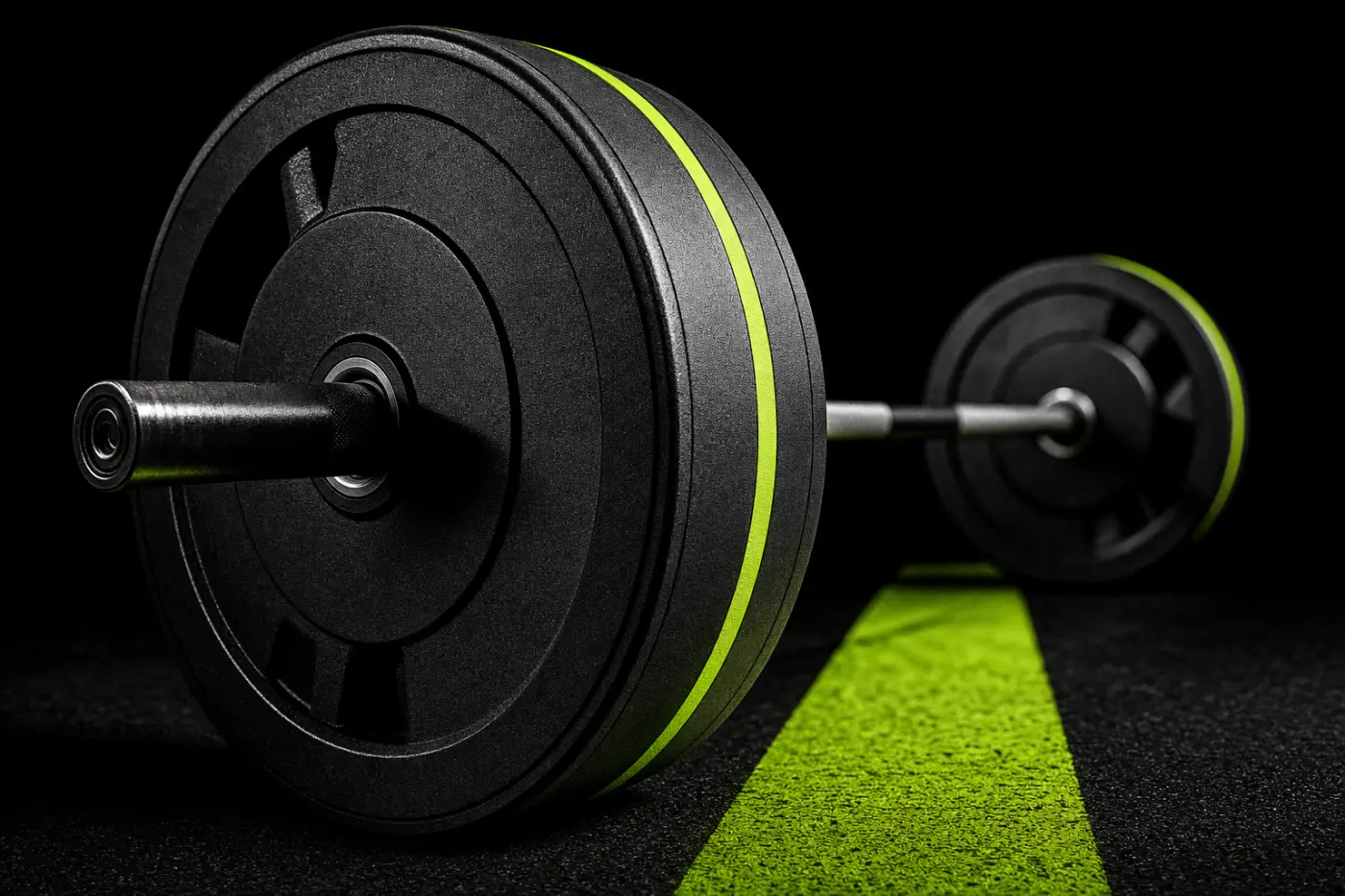
The Deadlift for Endurance Athletes: How Heavy, How Often
The most useful lift for a runner and the one most likely to wreck a training week if programmed badly. Loading, frequency, which variation to pick, and where to put it so it does not eat your long run.
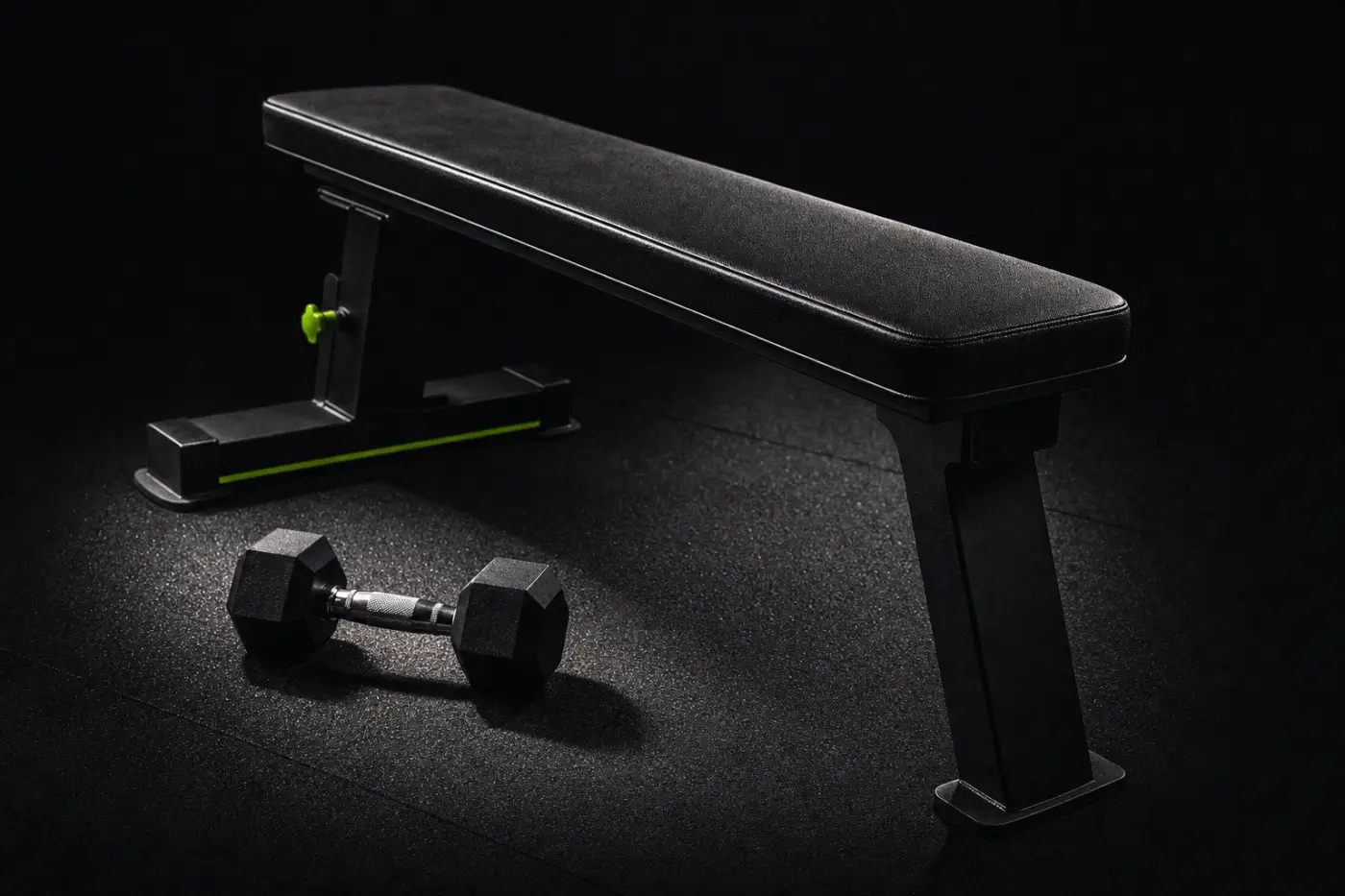
Bulgarian Split Squats: Why They Hurt So Much and Why You Should Do Them
The most hated accessory in strength training is also one of the highest-return exercises for anyone who runs. What makes them disproportionately brutal, how to set up so you train the right thing, and how to program them without wrecking your week.
Core Training for Runners: What Actually Transfers
Most 'weak core' diagnoses are weak hips, and most core work is chosen for burn rather than function. What the trunk actually does during running, the four exercises worth keeping, and why endless crunches change nothing.