The Bulgarian Method: Maximal Lifting Every Day, and Why Almost Nobody Should Copy It
A national weightlifting programme built on working to a daily maximum, repeatedly, with extraordinary results and an extraordinary attrition rate. What the system actually was, why it worked for the people who survived it, and what a sane version looks like.
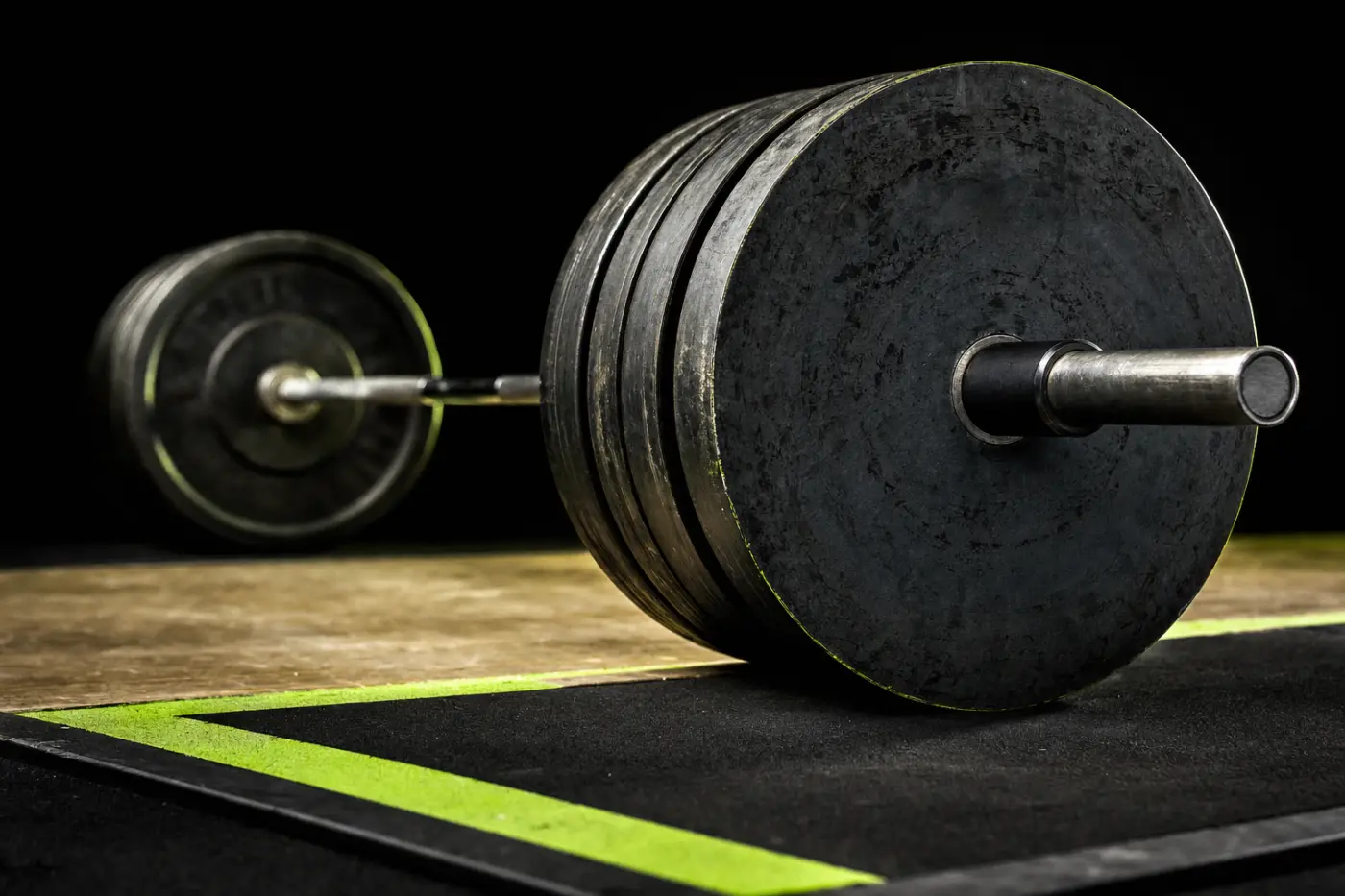
- A handful of exercises, worked to a daily maximum, multiple times a day, most days.
- The results were genuine and the attrition rate was enormous.
- It operated in a context of full-time athletes, vast selection pools and pharmacological support.
- The transferable idea is auto-regulation — training to today's capacity, not a fixed number.
- Copying the system without the context is how ordinary lifters get hurt.
In the 1970s and 80s, a small country with a population under nine million became the most feared team in international weightlifting. The training system behind it broke almost every rule of programming that was orthodoxy at the time, and it remains one of the most misapplied ideas in strength training.
What the system actually was
The approach associated with the Bulgarian national coach Ivan Abadjiev was defined by two commitments taken to their logical extremes.
Extreme specificity. Almost everything was stripped out. The programme centred on the competition lifts — the snatch and the clean and jerk — plus front squats and closely related variations. No general strength work, no bodybuilding accessories, no conditioning. If it was not the competition lift or directly supporting it, it was gone.
Extreme frequency and intensity. Athletes worked up to a maximum for the day, in multiple sessions per day, six days a week. Not a percentage of a max established months earlier — the heaviest weight they could lift on that day, on that lift.
The reasoning was coherent, and worth stating fairly. Abadjiev argued that the body adapts to the specific stress imposed, and that the stress of competition is a maximal single attempt. Therefore the training should be maximal single attempts. Anything else was training for something you would not be asked to do.
He also argued that the body adapts to frequency — that lifting maximally becomes normal if you do it constantly, and the fatigue that makes it seem impossible is itself something you adapt to.
It worked. Bulgarian lifters produced an extraordinary run of international results from a very small population.
The context that never travels with the story
Here is where most retellings stop, and where the useful part begins.
These were full-time athletes. Training was the job. Multiple sessions a day, with sleeping, eating and treatment arranged around them. No commute, no desk, no evening obligations.
The selection pool was enormous relative to the squad. The system was not designed to develop everyone. It was designed to find who could withstand it. Athletes who broke down were replaced from a deep pipeline, and the ones you have heard of are the ones who did not break.
The attrition rate was very high. This is not a footnote. Many talented athletes were injured out of the sport by the demands of the system, and they do not appear in the results.
The era's pharmacological context is well documented. Bulgarian weightlifting was subject to repeated doping sanctions across subsequent decades, including team-level withdrawals from major competitions. Anabolic support materially changes how much maximal work a body can recover from, which is precisely the variable the system was pushing to its limit.
Full medical and coaching supervision was constant, with daily assessment of whether an athlete should proceed.
Put together: a self-selected group of the most durable athletes from a large pool, training full-time, under constant supervision, with pharmacological assistance, in a system that discarded whoever could not tolerate it.
The results were real. The inference "therefore this is the best way to train" does not follow, and the people most likely to draw it are the ones with the least of that context.
Why it breaks ordinary lifters
The mechanism is straightforward and it is the same one that governs tendons adapting slower than muscle.
Maximal loading is a joint and tendon problem more than a muscle problem. Muscle recovers from heavy singles reasonably fast. Connective tissue accumulates stress and adapts over months. Daily maximal loading gives it continuous high stress and almost no variation.
Neural fatigue accumulates invisibly. Maximal attempts are extremely demanding on the nervous system, and the deficit builds silently over weeks before manifesting as an inability to hit weights that were easy a fortnight ago.
There is no room for a bad week. Life delivers poor sleep, illness, stress and travel. A system with no variation and no easy days has no mechanism for absorbing them.
Technique degrades under maximal fatigue, and degraded technique under maximal load is exactly the injury scenario.
What is genuinely worth borrowing
Two ideas survive translation, and both are valuable.
1. Auto-regulation
This is the real gift of the system. Training to what you can do today, rather than to a number a spreadsheet decided three weeks ago.
The practical version:
- Work up to a smooth heavy single — the heaviest weight that moves well, with no grinding and no technique breakdown. Not a true maximum
- Use that as the day's reference. Do back-off sets at 80 to 90 percent of it
- Some days that single is high, some days it is well below your best. Both are correct, because both reflect your actual capacity that day
This handles sleep, stress, fatigue and everything else that a percentage-based plan pretends does not exist. It is now a mainstream method in strength training, and the Bulgarian system is a large part of why.
2. Specificity and frequency, in moderation
Getting good at a lift requires doing that lift often. Squatting once a week and expecting to be a good squatter is a slower path than squatting three times a week at moderate loads.
The evidence broadly supports higher frequency at moderate intensity over low frequency at maximal intensity, for both skill and hypertrophy — which is roughly the Bulgarian insight with the intensity dialled back to something recoverable.
A sane version
For a hybrid athlete who also runs, which is about as far from a Bulgarian weightlifter as it is possible to get:
- One or two lifts trained to a daily heavy single, two or three days a week. Not every lift, not every day
- The single is smooth, never a grind. If it slows or the position breaks, that was the top set
- Back-off volume behind it — 3 to 4 sets at 80 to 85 percent of the day's single
- Genuine easy days, which the original system did not have and which you need because you are also running
- Deload when the daily singles trend down for a week. That is the signal, and it is a considerably better one than a calendar
The implement and exercise selection is a separate question — trap bar vs barbell vs dumbbells covers it, and the only six lifts a runner needs is the underlying programme this sits on top of.
The pattern worth noticing
The Bulgarian story has the same shape as several others in this sport. A coach pushes a principle to an extreme, gets remarkable results with a selected group under conditions nobody else has, and the extreme version becomes the story while the transferable principle gets lost.
Lydiard's 100-mile weeks became a number rather than a principle about aerobic base. Zátopek's repetition counts became folklore rather than a lesson about repeatable efforts. The Bulgarian method became "max out every day" rather than "train to today's capacity".
In each case the extreme is the least transferable part and the most repeated one.
The summary
The Bulgarian system worked, for full-time athletes selected for durability from a large pool, with supervision and pharmacological support, at an attrition rate that would be unacceptable anywhere else.
You are not in that context, and the version of it that reaches the internet strips out everything that made it survivable.
Take the auto-regulation. Take the frequency, moderated. Work to a smooth heavy single a couple of times a week and let the number tell you what kind of day it is. Leave the rest where it came from.
Questions people ask
What was the Bulgarian weightlifting method?
A training system associated with Bulgarian national coach Ivan Abadjiev in the 1970s and 80s, built on extreme specificity and frequency — a very small number of competition lifts and front squats, worked up to a maximum for the day, in multiple sessions per day, six days a week. It rejected the periodised, high-variety approaches common at the time.
Does the Bulgarian method work?
It produced a remarkable run of results for the athletes who survived it, and the survivorship qualifier is essential. The system operated with full-time athletes selected from a large pool, extensive medical and pharmacological support, and an attrition rate that would be unacceptable in any normal setting. The outcomes are real and not transferable as-is.
Can normal lifters train to a daily max?
A moderated version can work well. Training to a daily maximum — the heaviest smooth single you can manage that day without grinding — is a legitimate auto-regulatory method, and works best on one or two lifts, a few days a week, with volume work behind it. The daily part, on multiple lifts, several times a day, is where it breaks people.
What is auto-regulation in training?
Adjusting the day's training to your actual capacity on that day rather than to a number written weeks earlier. Working up to a smooth heavy single and then doing back-off sets based on it is the common implementation, and it accounts for sleep, stress, fatigue and everything else a fixed percentage-based plan ignores.
Why did the Bulgarian system have such high attrition?
Because maximal loading every day places connective tissue under continuous high stress with little variation and minimal recovery, and tendons and joints adapt far more slowly than the nervous system and muscles do. Athletes who could tolerate it thrived; those who could not were injured and replaced from a large waiting pool.
Keep reading

Fartlek: The Swedish Idea That Refuses to Die
Speed play was invented partly as a rebellion against the stopwatch, and it has outlived most of the systems that replaced it. Where it came from, why unstructured intensity still works, and four sessions worth running.

How the Ironman Started as an Argument About Who Was Fittest
In 1978 a group in Hawaii could not agree whether swimmers, cyclists or runners were the fitter athletes, so they combined three existing races and settled it. The origin of the modern endurance event, and what it says about hybrid sport.

Lydiard and the 100-Mile Week: What Survived Sixty Years of Scrutiny
Aerobic base building was radical when Lydiard proposed it and is orthodoxy now. What his system actually prescribed, which parts the evidence has supported, and which parts get quoted far past what he meant.